

Want to crop a webcam, game capture, screen recording, or other video source in OBS? OBS Studio allows you to crop a source directly in the preview window without installing additional plugins. You can quickly crop a source by holding Alt on Windows/Linux or Option on macOS and dragging its edges.
In this guide, we'll explain how to crop in OBS, including the quickest shortcut, precise crop settings, and the Crop/Pad filter. We'll also show you what to use if you need to crop an existing video file.
Part 1: Can You Crop a Video in OBS?
Yes, you can crop a video source in OBS. OBS allows you to crop sources such as Display Capture, Window Capture, Game Capture, Video Capture Device, and Media Source.
It is important to understand that OBS crops a source within a scene. It is not primarily a conventional video editor for importing an existing video, editing it, and exporting a new file.
Part 2: How to Crop in OBS
There are several ways to crop a source in OBS. The quickest method is to use the Alt/Option + drag shortcut, while the Transform settings and Crop/Pad filter provide more precise control.
Method 1. Crop a Source by Dragging
This is the simplest way to crop a source in OBS.
Step 1Add a Source
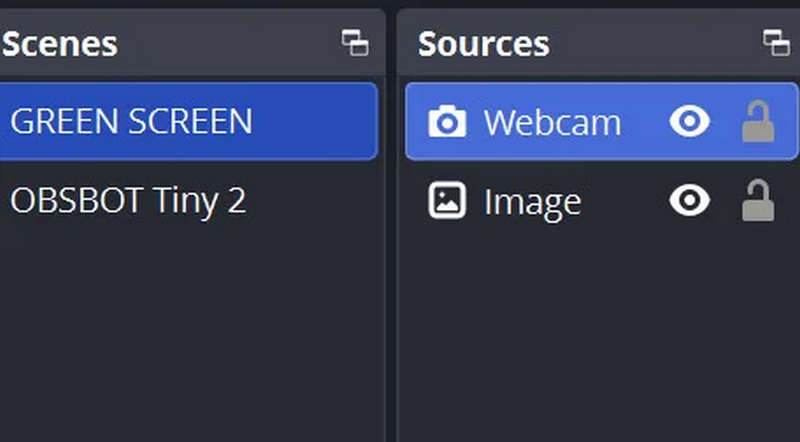
Open OBS Studio and create or select a scene. In the Sources panel, click the + button and choose the source you want to crop. You can add Display Capture, Window Capture, Game Capture, Video Capture Device, or Media Source.
Step 2Select the Source
Click the source in the Sources panel. A red bounding box will appear around the source in the OBS preview.
Step 3Crop the Source
- On Windows or Linux, hold Alt and drag one of the edges of the bounding box inward.
- On macOS, hold Option and drag the edge inward.
You can crop the top, bottom, left, or right side of the source independently. This lets you remove unwanted areas while keeping the part of the source you need.
Step 4Reposition the Source
After cropping in OBS, drag the source to reposition it within the scene. You can also resize it to fit your canvas.
Method 2. Crop a Source with Transform Settings
If you need more precise control, you can adjust the crop values through OBS's Transform settings.
Step 1Select the Source
Select the source you want to crop from the Sources panel.
Step 2Open Transform
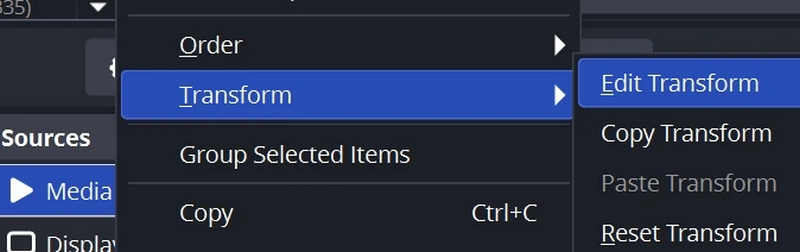
Right-click the source and select Transform > Edit Transform.
Step 3Enter Crop Values
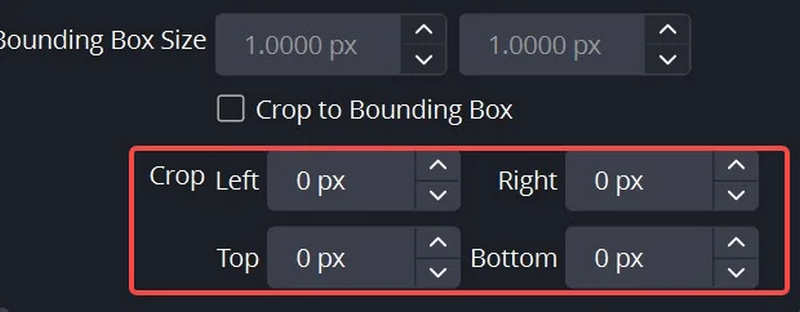
In the Edit Transform window, find the crop settings for the Left, Right, Top, and Bottom sides.
Enter the values you need to remove specific areas from the source. That's how easy to crop in OBS.
This method is particularly useful when you want consistent or precise cropping rather than manually dragging the edges in the preview.
Method 3. Use the Crop/Pad Filter
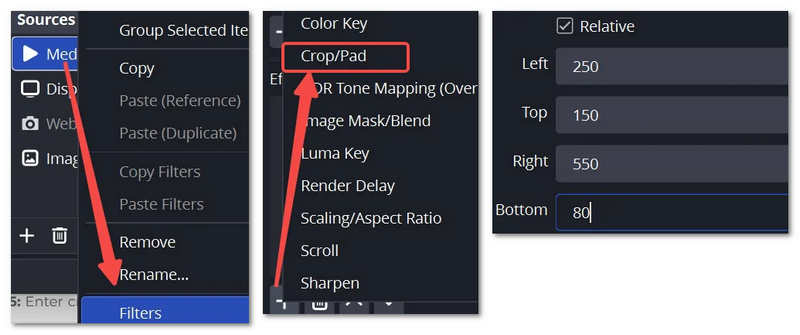
OBS also provides a Crop/Pad filter that can be used to crop a source. To access it, right-click the source and select Filters. Under Effect Filters, add Crop/Pad.
You can then enter crop values for the top, bottom, left, and right sides. This method can be useful when you want cropping to be handled as a filter applied to the source.
Part 3: An Easier Way to Crop While Recording
AVAide Screen Recorder is a convenient alternative to OBS for users who want to crop the recording area before recording. It lets you capture the full screen, a specific window, or a customized area, so you can focus on the content you actually want to record. You can also adjust or lock the aspect ratio of the recording area before starting. With support for system sound, microphone, webcam, and additional recording tools, it provides a simpler way to crop your screen and record at the same time.
- Select the full screen, a specific window, or any custom area before recording.
- Adjust the recording area to remove unwanted parts of the screen without additional cropping afterward.
- Keep the selected recording area proportional when adjusting its size.
- Capture system sound and microphone audio together with your screen recording.
- Record your screen and webcam simultaneously for tutorials, presentations, and gameplay videos.
- Crop your video to square, YouTube (16:9), TikTok (9:16), and many other aspect ratios.

 Secure Download
Part 4: FAQs of How to Crop in OBS
How do I crop a webcam in OBS?
Add your webcam as a Video Capture Device, select it in the preview, and hold Alt on Windows/Linux or Option on macOS while dragging its edges inward.
How do I crop a game capture in OBS?
Add Game Capture as a source and select it in the OBS preview. Hold Alt on Windows/Linux or Option on macOS and drag the edges inward to crop the capture.
How to lock aspect ratio in OBS?
To keep the original aspect ratio when resizing a source in OBS, hold the Shift key while dragging a corner of the source's bounding box. This helps prevent the source from being stretched or distorted.
How to crop OBS window capture?
Select your Window Capture source in the OBS preview, then hold Alt (Windows/Linux) or Option (Mac) and drag the edges inward to crop the unwanted areas. You can then reposition the cropped window as needed.
Cropping on OBS is simple once you know the correct shortcut. Select a source, hold Alt on Windows/Linux or Option on macOS, and drag its edges inward. For more precise control, you can use Transform > Edit Transform or the Crop/Pad filter.
However, there is an easier way to crop a recording source: AVAide Screen Recorder. It is more lightweight and can do fast recording with a convenient cropping feature. You can record screen, game, webcam, microphone, and even your Android and iOS phone with the original or even 4K HDR quality.
ABOUT THE AUTHOR

Record screen, audio, webcam, gameplay, online meetings, as well as iPhone/Android screen on your computer.
Crop & Resize Video
- Top 8 GIF Resizers for Windows and Mac
- How to Resize or Crop Videos For Instagram
- Knowledgeable on How to Change Video Aspect Ratio
- How to Crop and Resize Videos on Android
- How to Crop Videos in Premiere Pro
- How to Crop Videos on iMovie
- How to Crop Videos on Mac
- How to Crop a Video in QuickTime
- Top 5 Amazing Aspect Ratio Converters to Crop Your Videos Greatly
- How to Change Aspect Ratio in Windows Movie Maker
- How to Resize a Video in Photoshop
- How to Crop MP4 Video Superbly
- How to Use the Ffmpeg to Resize Your Videos
- How to Crop Video without Watermark
- How to Crop a Video on Windows
- How to Crop Videos in Windows Meida Player
- How to Crop Videos to Square
- How to Crop Videos in After Effects
- How to Crop Videos in DaVinci Resolve
- How to Crop Videos in OpenShot
- How to Crop Videos Using Kapwing
- How to Crop Snapchat Videos
- How to Use VLC Crop Videos
- How to Crop Camtasia Videos
- How to Use OBS Crop Videos
- How to Use Ezgif Resize Videos
- How to Change Aspect Ratio in Final Cut Pro