

Video stabilization helps turn shaky footage into smoother, easier-to-watch clips, whether it was recorded on a phone camera or even a computer. This little guide covers practical approaches, built-in options, editing tools, and also simple ways to make an unstable video feel calmer.
Part 1. Common Causes of Shaky Video
Shaky footage can happen even if the recording feels kinda steady while you are filming. Like, those tiny slips, shifting conditions, and sudden action can quietly mess up the final look, no kidding.
- Handheld recording: Natural hand tremors plus little shifts can turn into wobbling, especially when you do longer takes. If your grip is slightly loose or you keep the device away from your body, it can make the shake seem much more obvious, and it builds up over time, too.
- Walking or running while filming: Every step adds bounce, and that can make the video look uneven. Running tends to deliver more sharp jolts, while walking gives a rhythm like an up-and-down motion you just can’t really ignore, even if you try.
- Drones and action cameras: Vibrations, wind, and sudden movements can cause instability. Quick turning, uneven ground, and even tougher outdoor weather can make the effect feel stronger, visually speaking.
- Zooming in: Zooming makes micro-movements hit harder. So those tiny shakes that were kinda invisible at wider angles suddenly become super noticeable, especially when you film distant subjects with high magnification.
- Low light: In dark scenes, slower shutter speeds can increase motion blur, making the shakiness look more intense. If your subject is moving and the camera is also shifting, or if you change the framing quickly.
Part 2. How to Stabilize Video on iPhone
1. Shoot with Action Mode (iPhone 14 and newer)
Action Mode is made for those moments where normal stabilization can get a little confused, like while running, walking fast, or tracking something that moves quickly. It adds a stronger form of steadiness, so the motion stays controlled, no fancy extra gear needed.
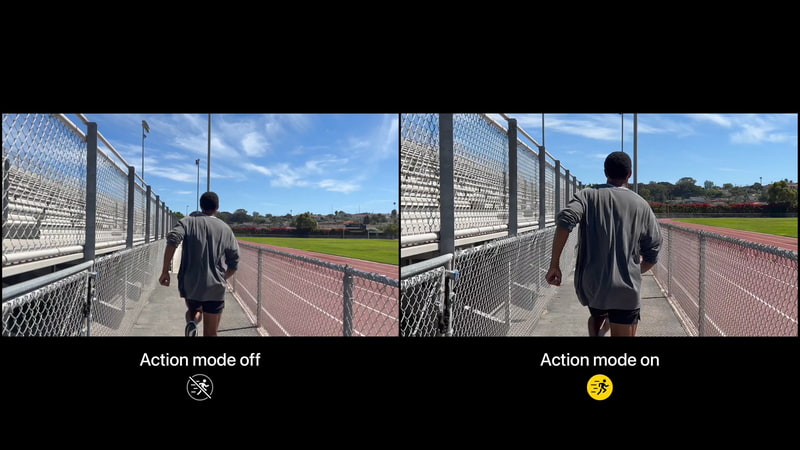
Step 1Open the Camera app, then switch over to Video mode.
Step 2Tap the Action Mode button up at the top of the display.
Step 3Line up the subject, and hit Record.
Step 4Keep moving kinda naturally, but try to hold the subject within the frame.
Step 5Tap Record again to end the take.
2. Enable Enhanced Stabilization (System Setting)
Enhanced Stabilization is a good idea when your handheld videos show tiny jitters, the kind that still makes the footage seem kinda ok but not that polished. It works directly within the Camera settings, so there is no need to process anything later or compress a video on iPhone separately.
Step 1Go to Settings on the iPhone.
Step 2Scroll down, tap Camera.
Step 3Tap Record Video.
Step 4Find Enhanced Stabilization.
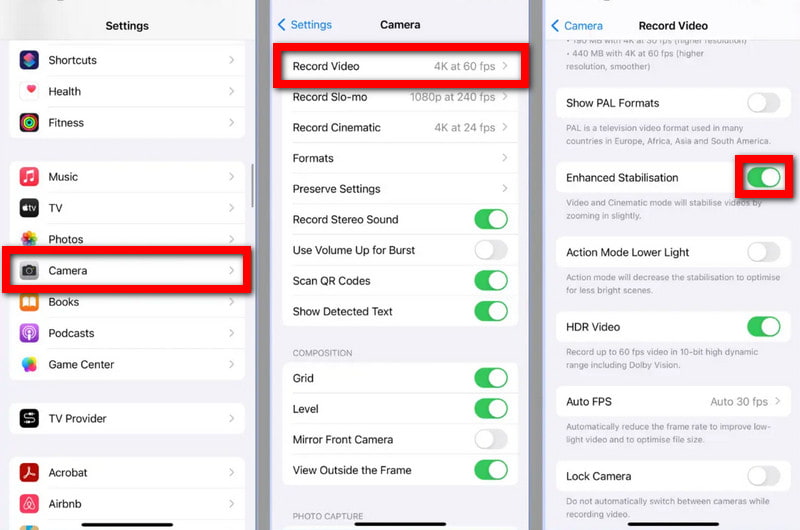
Step 5Turn it on before you start recording.
3. Stabilize Existing Videos with CapCut
CapCut feels way more useful if the shaky clip is already in your library, like you are fixing it rather than trying to stop it in the first place. The stabilization feature can tone down those unwanted jitters, and it is sort of convenient for a quick tidy-up before you share or export it.
Step 1Open CapCut, begin a new project, then add the shaky video from Photos.
Step 2Tap the clip on the timeline, then hit Stabilize.
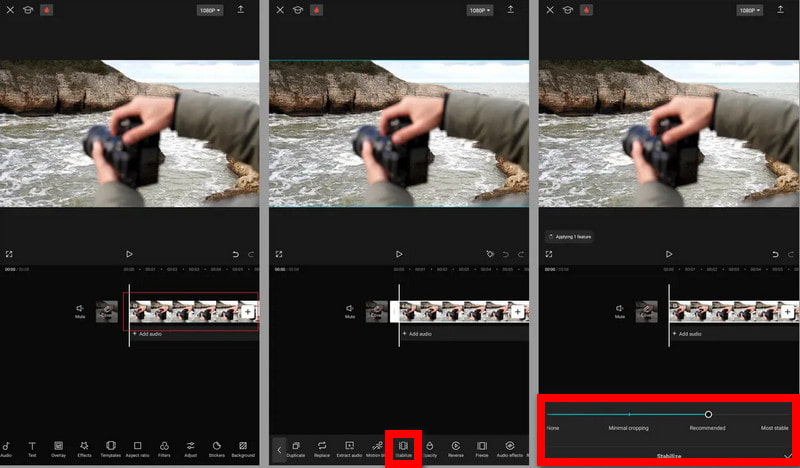
Step 3Choose a stabilization intensity based on how rough the shake is. Preview it, then adjust if you want.
Step 4Export the stabilized video.
Part 3. How to Stabilize Video on Android
1. Enable Camera Stabilization & Adjust Frame Rates
On most Android phones, there is some built-in stabilization, often right inside the Camera app, but yeah, the controls can be a bit different depending on the brand and the model you own. When you adjust the frame rate and stabilization together, you usually get a better trade-off among fluid motion, overall sharpness, and device performance.
Step 1Open the Camera app and flip over to Video mode.
Step 2Go into the camera Settings or look for something like Stabilization.
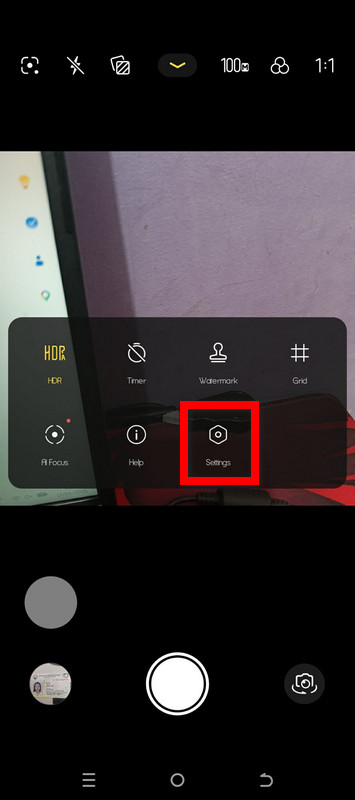
Step 3Turn on Video Stabilization, or whatever option sounds close to that.
Step 4Check the frame rate options, such as 30 fps or 60 fps.
Step 5Select the frame rate that seems most appropriate, then do a short sample recording.
Step 6Watch it back. If it still looks choppy or jumpy, tweak the settings again, and do it once more.
2. Google Photos (Easiest Method)
Google Photos is the easiest option if you have already recorded a shaky video and want to improve it without opening a full editor. The stabilization there runs almost all the heavy lifting automatically, so it works great for quick repairs when you do not need deep, manual editing controls.
Step 1Open Google Photos and select the video that looks shaky.
Step 2Tap Edit and choose Stabilize.
Step 3Wait for Google Photos to process it and smooth out the footage.
Step 4Preview what you got, and compare it with the original clip.
Step 5Tap Save copy so the stabilized version keeps its own spot, without replacing the old one.
3. InShot (Best for Control)
InShot gives you a more involved editing experience than a basic one-tap stabilizer, so it helps when a clip needs extra tuning before you share it. It can fit nicely into a workflow where stabilization is only part of the whole polish job for the final video.
Step 1Open InShot, tap Video, then import the footage you want stabilized.
Step 2Select the clip on the editing timeline, then open the stabilization or adjustment tools that appear.
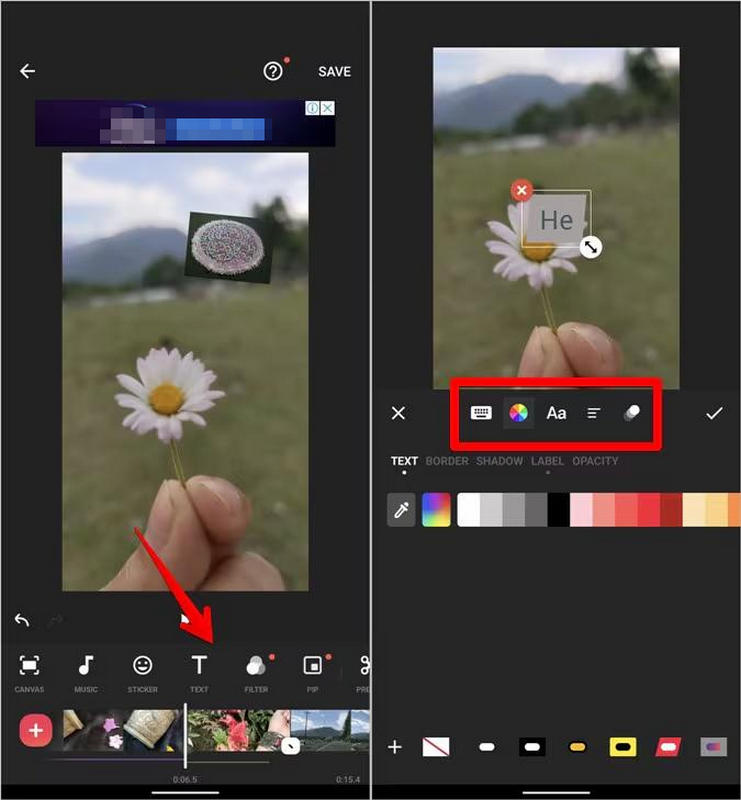
Step 3Apply the stabilization option that looks like it fits best, and preview right away.
Step 4If needed, make additional changes, such as trimming the video or tweaking anything that still looks off.
Step 5Tap Save or Export to complete the video.
Part 4. How to Stabilize Video on Windows & Mac
1. AVAide Video Converter
AVAide Video Converter is a pretty flexible pick for straightening out shaky footage, and honestly, it can do other video jobs too, all in the same place. The Video Enhancer bits, the noise reduction feature, the high-resolution support, plus those in-tool editing options make it easy to tidy up recordings and end with a more polished final clip… without having to keep bouncing between a bunch of different programs.
- Makes the video look clearer and boosts the overall visual quality, so the footage ends up cleaner.
- Cuts down on unwanted noise and helps the whole picture look more pleasing.
- Works with high-resolution video while preserving fine details.
- Leans on NVIDIA, AMD, and Intel hardware acceleration, so processing feels faster.
- It lets you trim, crop, rotate, merge, tweak colors, and add filters before you export.

 Secure Download
Step 1Download and install AVAide Video Converter on Windows or Mac, then run it.
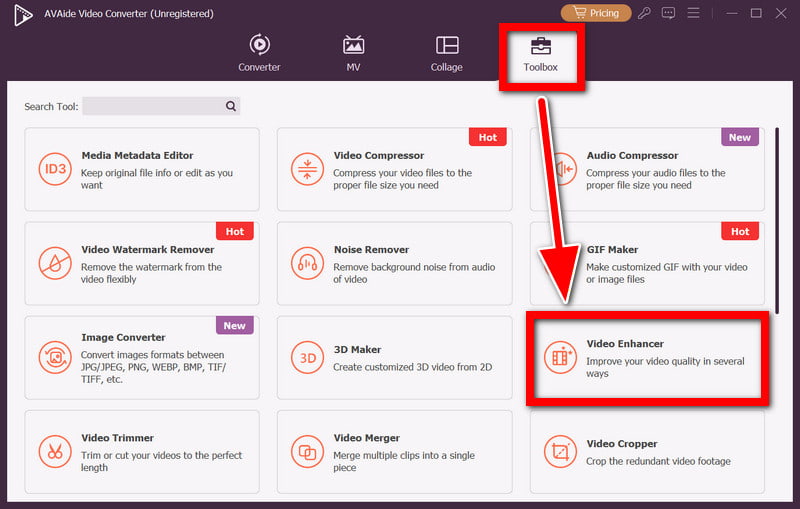
Step 2Open the program, go to the Toolbox, and find Video Enhancer there.
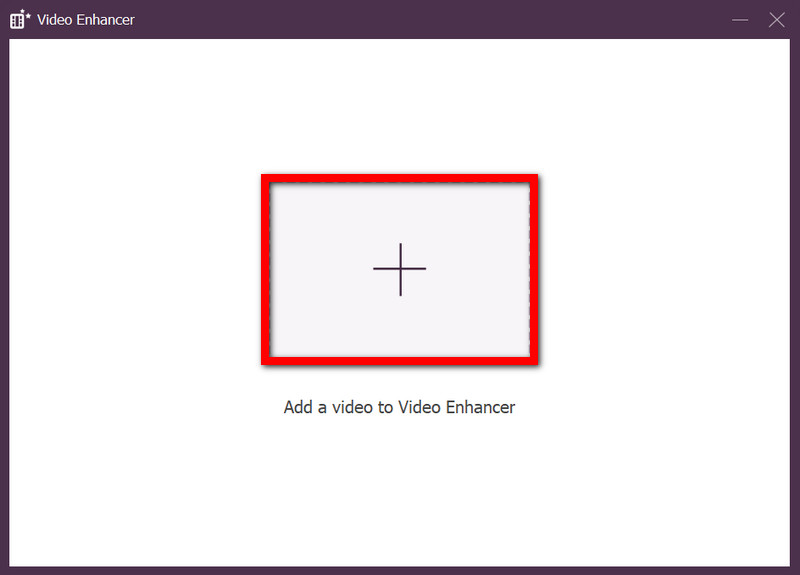
Step 3Hit the + button and bring in the shaky video, like drag and drop, but from import.
Step 4Turn on the Reduce Video Shaking option.
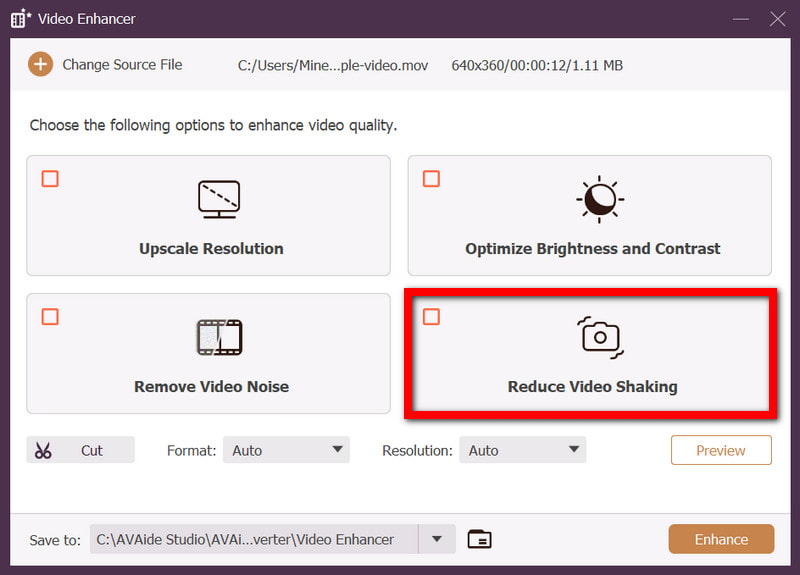
Step 5Use Preview to see how it looks before you enhance the full file.
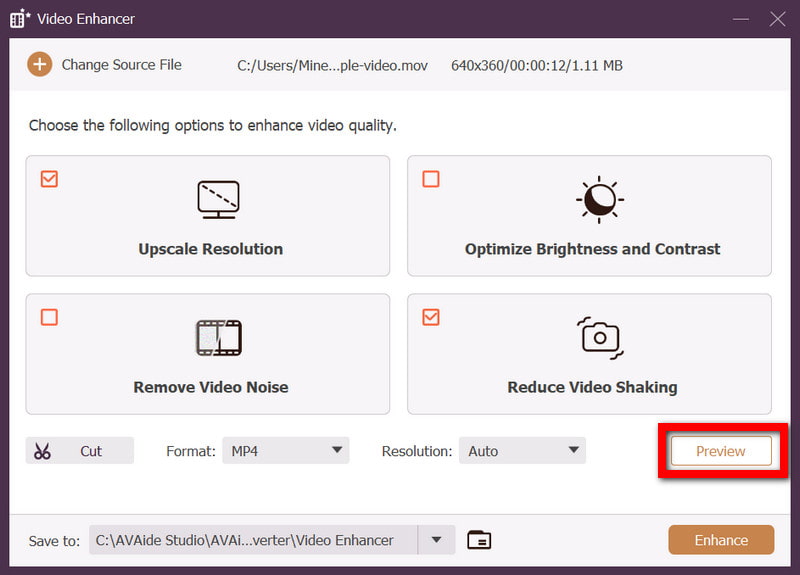
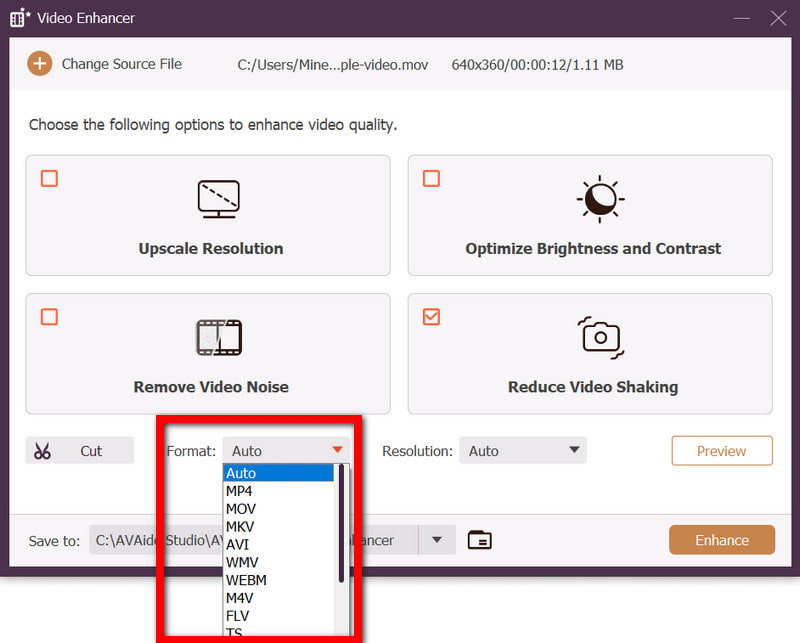
Step 6Pick your output format, resolution, and the destination folder.
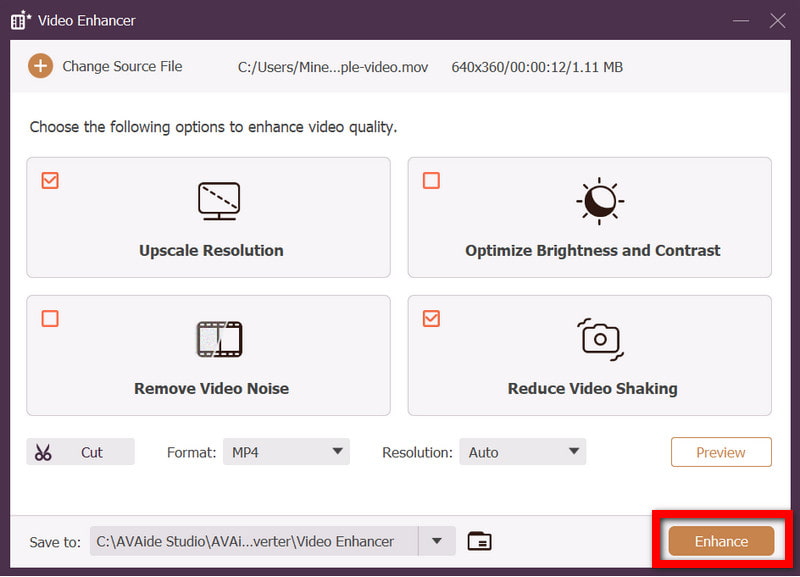
Step 7Tap Enhance to process everything and save a better video.
2. Adobe Premiere Pro
Adobe Premiere Pro is a pro-level video editing solution for footage that needs more exact stabilization control. Its Warp Stabilizer can scan for unwanted camera motion and smooth out the clip, and the extra settings let you dial in the stabilization vibe for different types of footage.
Step 1Download and install Adobe Premiere Pro from the official Adobe website, then start it and choose New Project.
Step 2Add the shaky video, then drag it onto the timeline to create a sequence.
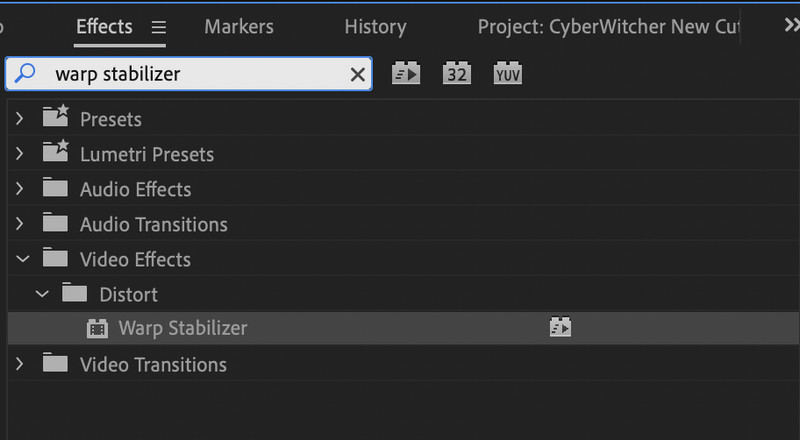
Step 3Go to the Effects panel, search Warp Stabilizer, and drop it onto the clip.
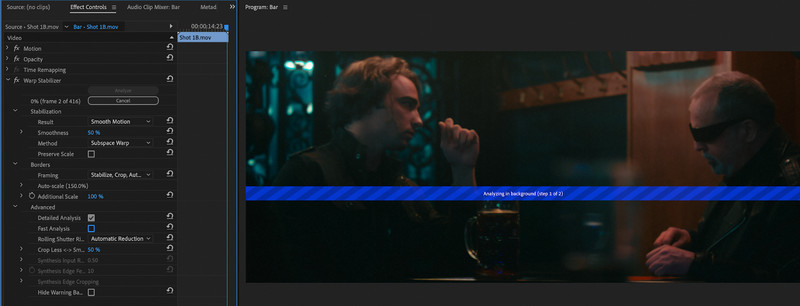
Step 4Wait a bit while Premiere Pro analyzes the footage; it will apply stabilization on its own.
Step 5Open the effect controls, tweak Smoothness, Method, or similar settings, then preview the clip to verify.
Step 6If the movement looks natural enough, export the stabilized video with your chosen format and quality.
3. 123 Apps
123 Apps gives you a practical browser-based option when installing editing software is not ideal. The workflow is pretty straightforward, so it is good for quickly smoothing a shaky clip before sharing, uploading, or adding it to another project.
Step 1Go to the 123 Apps webpage.
Step 2Click Open file and upload the shaky video, that's it.
Step 3Choose Stabilize and allow the tool to process the footage.
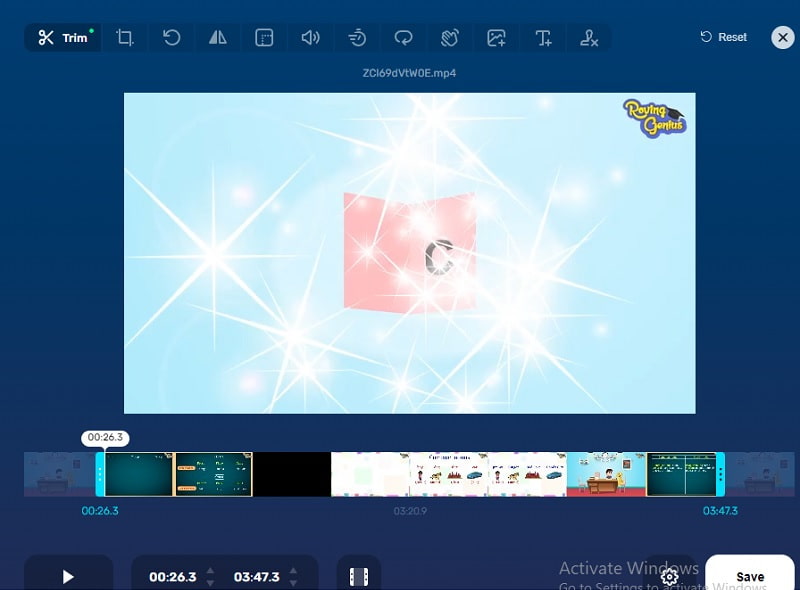
Step 4Preview it, and check if the video looks steadier.
Step 5Click Save to export the stabilized video.
Part 5. FAQs for Stabilizing Video
Does video stabilization reduce image quality or resolution?
Video stabilization can, sometimes, reduce image quality just a little. It often trims the outer edges, leaving some extra space for the correction, kind of like giving the frame a small buffer for motion. If you push the stabilization too hard, fine texture may look slightly softer, more smeared, or less crisp, which can also affect how bitrate is perceived in the final video.
Why does stabilized footage sometimes look warped or unnatural?
It usually happens when the stabilization algorithm cannot track the scene smoothly. Warping, or that odd bent look, can show up with fast panning, complicated motions, rolling shutter wobble, or when things like a person walking across the screen leave the software guessing.
Is it better to stabilize footage while recording or afterward?
Stabilizing during recording is often the calmer choice because the phone or camera can maintain steadier framing from the beginning. That tends to look more natural, especially for handheld shots.
You can stabilize video footage using built-in phone options, dedicated editor apps, or desktop and online tools. With the right approach, shaky clips can become more fluid, cleaner, and way easier to watch without that distracting vibration effect.
ABOUT THE AUTHOR

Your complete video toolbox that supports 350+ formats for conversion in lossless quality.