Shaky videos can become inevitable during shooting. That's why editing is important before you publish your project. In this article, we have gathered the best methods for stabilizing videos in Premiere Pro, using its standard solutions and accessible alternatives. But before learning how to stabilize videos in Premiere Pro, let's answer a few questions relating to stabilizing and why it is important.
Part 1. Why Stabilize Video in Premiere Pro?
Before we jump into learning how to stabilize video in Premiere Pro, let's go in-depth on why shaky videos happen and why applying stabilization effects matters.
1. Why Shaky Footage Happens
There are a few reasons why video recording can turn into shaky footage. But the most common issue with camera movements is whether the tripod is mounted on an uneven floor or has rusty quick-release plates. Not to mention, the camera operator can cause shaky shots, especially if the recording involves running and other movements from the main objects.
2. Why Stabilization Matters
Your viewers see the outcome of your project. When an unstable visual appears on the screen, it can be distracting, and sometimes your viewers might see this project as low-quality.
Part 2. Stabilize Video with Warp Stabilizer (Standard Method)
Adobe is one of the best-known and most widely used video editing software programs. Its suite of editing tools includes help features such as Adobe Upscale Image, Premiere Pro, and others, allowing you to achieve professional-grade projects. In this case, you are about to learn how to stabilize video in Premiere Pro using the standard method.
Step 1Open Adobe Premiere Pro to stabilize a video. Go to the Media Browser and drag the file into the Project Panel.
Step 2Right-click the video and select the Effects option. Under Video Effects, find and click the Distort submenu, and then you will find the Warp Stabilizer.
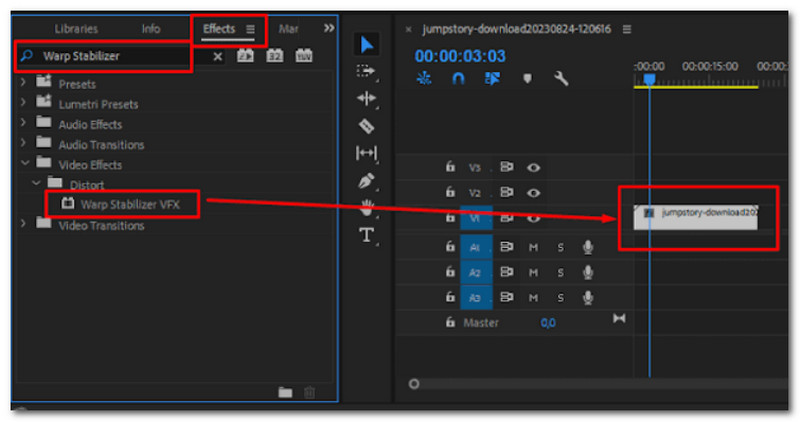
Step 3Drag the Warp Stabilizer onto the uploaded video and wait until the software has finished processing it. Then, you can preview and save the edited video.
Part 3. Stabilize Video in Premiere Pro Without Warp Stabilizer
The Warp Stabilizer effect does not guarantee the best result. In fact, many users find this effect distorts the video more than it stabilizes it. So, here are some alternative methods, including steps in Adobe Premiere Pro to stabilize video.
1. Manual Stabilization with Keyframes
Step 1Go to the Effects workspace and apply the Warp Stabilizer to your video by dragging it onto the timeline. Switch to the Editing workspace to review the effect's settings. By default, the effect is on Smooth Motion, but you can adjust the smoothness between 50% and 75%.
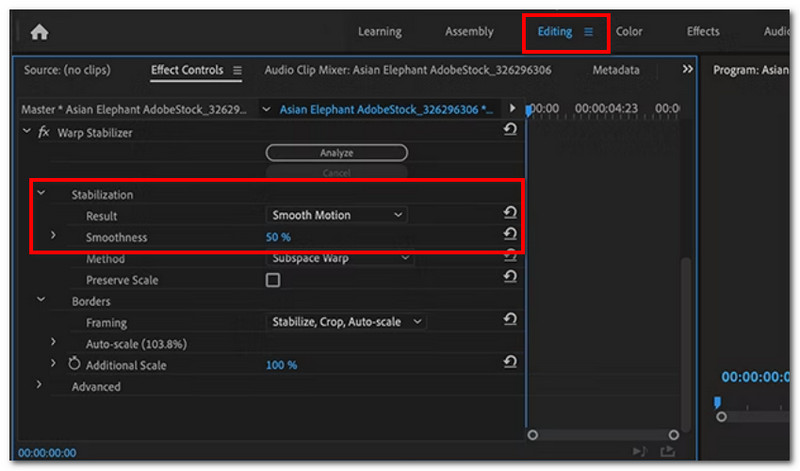
Step 2From the Borders menu, adjust the Framing option to see the stabilization phase. Go to the Scale and Position settings to keyframe the video and help viewers focus on the main object in your clip.
2. BCC Optical Stabilizer Plugin
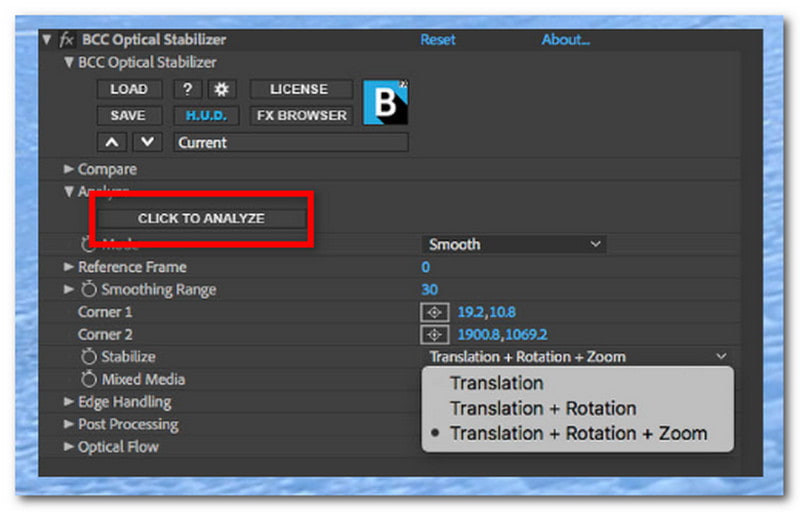
Step 1Install the plugin in Premiere Pro and add the shaky video. From the Effects workspace, drag the BCC Optical Stabilizer and wait for it to analyze the video.
Step 2Once done, go to Effects Controls and click the Click to Analyze button. After a while, your video will be stabilized.
3. Mocha Pro Plugin
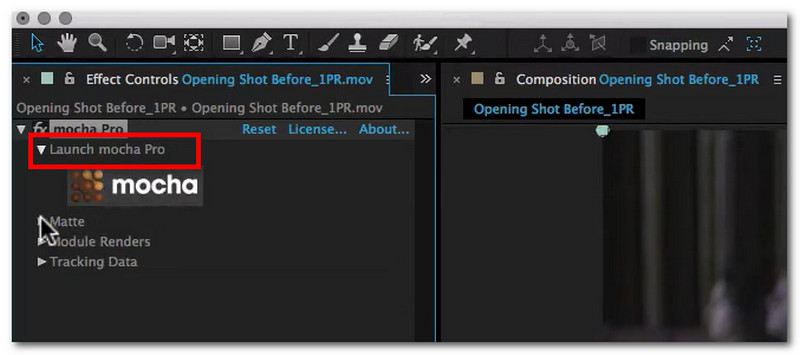
Step 1Download and install the Mocha Pro plugin on your Premiere Pro. Go to the Effects workspace in Adobe and search for the plugin.
Step 2With your video clip on the timeline panel, proceed to the Effect Controls menu, locate the Mocha plugin, and click Launch Mocha. You can access this plugin's advanced settings as long as your workspace view is set to Classic.
4. Replace with After Effects Composition
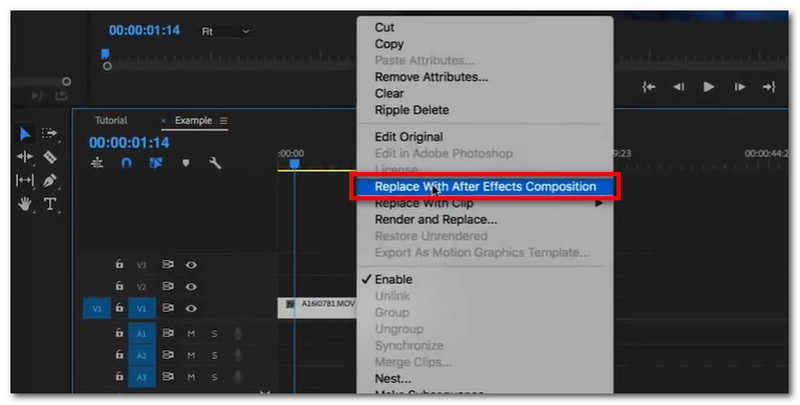
Step 1Upload your shaky video to After Effects. In the timeline, right-click the video and choose the Replace With After Effects Composition option. Go to the Tracker, then choose Track Motion to activate a two-rectangle tracker. Place it in the main object of the video.
Step 2Right-click on the timeline to select New > Null Object. From the Edit Target menu, ensure that 1 Null 1 is applied.
Step 3Then, select New again, but choose the Camera option to parent it to the null. Go to Toggle Switches, then tick the box for 3D to apply all changes.
Part 4. Stabilize Video in Premiere Pro Mobile
Adobe has released a mobile app version of Adobe Premiere Pro called Adobe Premiere Rush. It has most of the functions of the desktop version, now available on Android and iOS. Unfortunately, the app version does not yet include an effect to stabilize videos, so you will need to complete your project using the desktop software. So, how to add video stabilization in Premiere Pro from your phone? The good thing is, you can integrate and access your video clips from Adobe Premiere Rush into Premiere Pro and use Warp Stabilizer as the standard effect.
Bonus: Stabilize Video in Premiere Pro with Speed Effects
Before you proceed with the procedures above, remember that applying Warp Stabilizer and speed changes (speed ramps) to the same clip can cause issues. Premiere Pro may show an error like “Shake stabilization and speed cannot be applied to the same clip.” You can use a Nested Sequence to prevent both effects from being applied at the same time.
Part 5. Stabilize Video with AVAide Video Converter (Alternative)
If Adobe Premiere Pro is too advanced for you and you're looking for an alternative to stabilize your videos, we recommend AVAide Video Converter. It is desktop software designed with an intuitive interface, so it is quick to learn to navigate. It also supports hundreds of video and audio formats, allowing you to edit MP4, M4A, MKV, WebM, etc., without hassle. The most notable thing about AVAide is its fast processing speed and guaranteed high-quality results, putting it on par with Adobe's professional work. Below, learn how to make a video stable in Premiere Pro, but alternatively, with AVAide Video Converter:
Step 1Download AVAide to your computer and follow the steps provided to install it successfully.

FREE DOWNLOAD For Windows 7 or later
 Secure Download

FREE DOWNLOAD For Mac OS X 10.13 or later
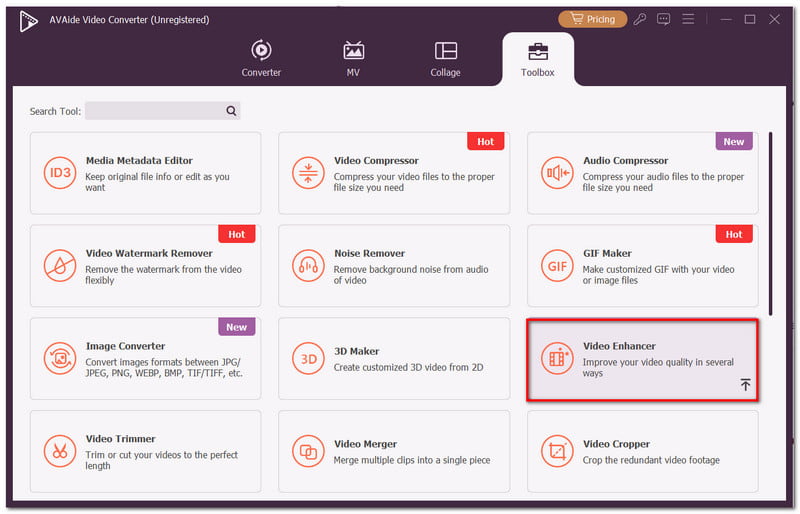
Secure DownloadStep 2Open the software, go to the Toolbox menu at the top of the interface, and click the Video Enhancer option. Upload the shaky video, then wait until the next dialog box appears.
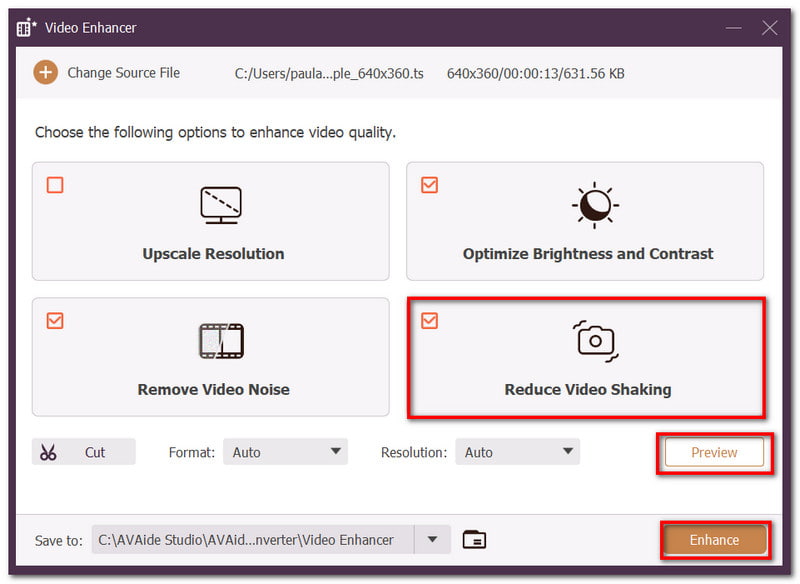
Step 3Tick the Reduce Video Shaking option from the dialog box. You can also upscale the video by ticking other options. Click the Preview button to see the changes, then click the Enhance button to process.
You discovered how to stabilize video in Premiere Pro using the most popular solutions in the software. However, if you think that it is taking a lot of time and energy to learn how to use Adobe, you can rely on AVAide Video Converter to apply stabilization effects in just a few clicks. Try it now by downloading the free version on Windows and Mac.
ABOUT THE AUTHOR

Your complete video toolbox that supports 350+ formats for conversion in lossless quality.