When handling a WAV file, you would need a good WAV editor to avoid losing its original quality. In the digital world, there are a lot of solutions to edit audio files, but there are only a few that guarantee the best outcome. Allow this article to provide you with the best editors that you can use on your computer or mobile phone.
Part 1. What Makes WAV Different from Other Audio Formats?
The WAV format is a lot different from other popular formats like MP3, and that is because it handles raw audio data via PCM or Pulse Code Modulation. It preserves all details of the original audio, but it creates a large file size.
While this audio format is different and it can consume storage space, it is unexpectedly supported by many platforms. In fact, you can use WAV for music production, archiving, and soundtracks for films, games, and others.
Part 2. The Audio Editing Workflow: What You'll Actually Do
To edit WAV, you need to consider what you will need to get to the audio you want. To set a clear goal, here's an editing workflow to do:
- Trimming
Focus on deleting the beginning and ending parts of the audio. Mostly, you want to get rid of the long, dead silence, noise, and other distractions. - Cutting
Remove a section of the audio that is unrelated to the soundtrack as a whole. You can use this option for deleting a chunk of the audio while keeping it intact. - Merging
Sometimes, there are many takes in audio recording. You can merge audio tracks using an audio editor. - Volume adjustment
If the WAV file is too quiet or loud, adjust the volume as desired. Just make sure not to overdo it, or the audio will result in distortion. - Noise reduction
Edit the WAV by applying noise reduction. This option can reduce other sounds caught in the recording. - Normalization
This effect allows you to adjust your audio to a specific amount of loudness. It does a good job of preserving dynamics and applying the same volume throughout the audio. - Metadata editing
It allows you to change and edit information in your file. You can modify the artist, title, album cover, year released, and other details. - Format conversion
You can decide to change WAV to other popular formats, like MP3, to make it easier to share across platforms.
Part 3. How to Edit a WAV File
Discover how to edit a WAV file using 4 solutions for Windows, Mac, iOS, and Android.
1. AVAide Video Converter - The All-in-One Solution
Choose a WAV editor like AVAide Video Converter for the fastest and most efficient WAV editing. It has a beginner-friendly interface, where you easily cut, trim, boost, volume, and merge audio files. It can also convert and compress WAV, resulting in a lossless quality. Moreover, AVAide can edit multiple files at once, making it the best choice for a heavy workload.
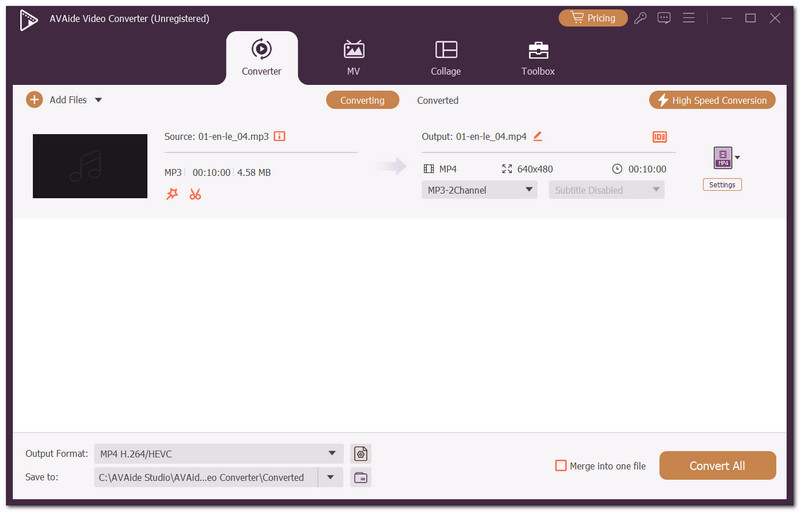
Step 1Get the .wav editor from the official website. Once installed, open the software and upload your WAV file. Go to the Edit menu under the uploaded audio.

FREE DOWNLOAD For Windows 7 or later
 Secure Download

FREE DOWNLOAD For Mac OS X 10.13 or later
Secure DownloadStep 2From the dialog window, increase or adjust the volume and delay. You can also proceed to trimming the audio from the Cut menu.
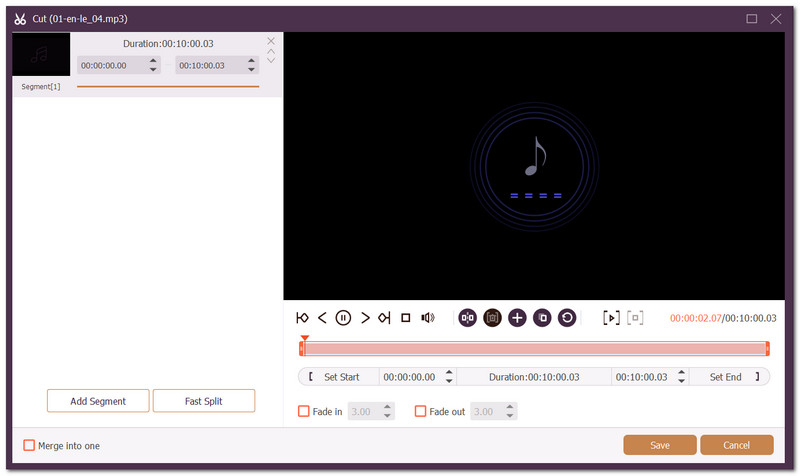
Step 3Preview your work, then click Save to apply the changes. Click the Convert All button to export the edited file.
2. Audacity - The Free Powerhouse
Audacity is a cross-platform WAV editor that you can have on Windows, Mac, or Linux. It offers free editing options, where you can professionally enhance your audio. It is a bit cluttered and outdated, but it's a great alternative if you want to step into advanced editing.
Step 1First, open Audacity and upload the WAV file you want to edit. If you wish to delete unwanted parts, simply click and drag on the timeline, then press Delete.
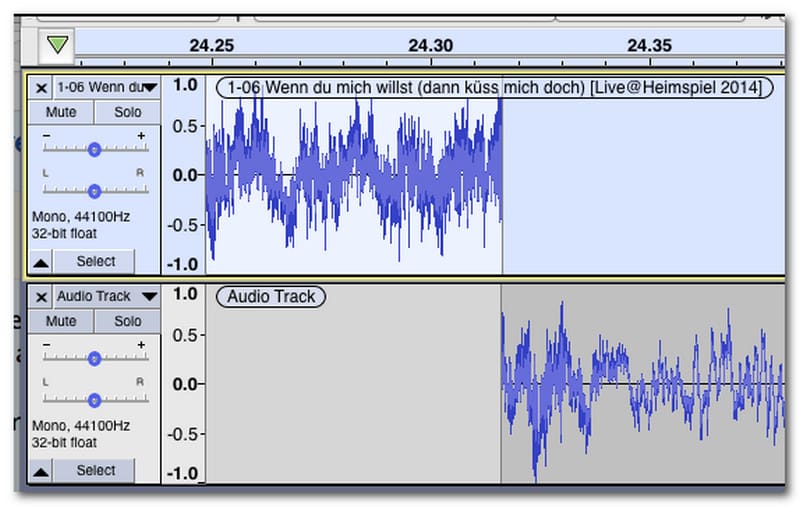
Step 2For boosting the volume, go to the Effect menu, then choose Amplify. Drag the button to increase volume. Also, ensure that the Allow Clipping option is not enabled to avoid clipping the sound. Preview the audio, then save it to your local folder.
3. AudioMass - Online WAV Editor
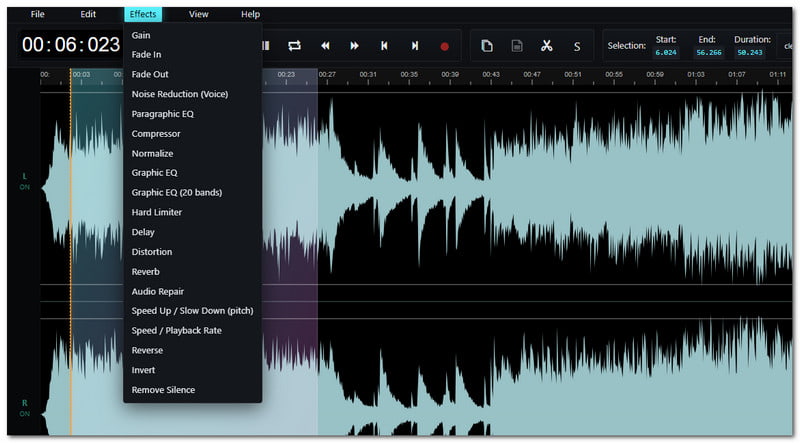
AudioMass is an online solution that does not require any software installation. It has an intuitive navigation, where you can easily achieve an edited WAV file. Here are the steps to get started:
Step 1Visit the WAV file editor online and import the audio you want to edit. Highlight a part of the audio, right-click on it, then click Cut.
Step 2You can also go to the Effect menu, where you can use Noise Reduction, Graphic EQ, delay, distortion, and other effects. Click Play to preview, then save to your folder.
4. WavePad Audio Editor - For iPhone
The wave editor is an app to edit audio files on an iPhone. It offers basic editing, as well as audio effects like amplification, equalization, and normalization. You can edit a WAV by following these steps:
Step 1Open the app on your phone and tap the Add Audio to load a WAV file. By selecting a part of the audio, you can cut, copy, delete, or paste.
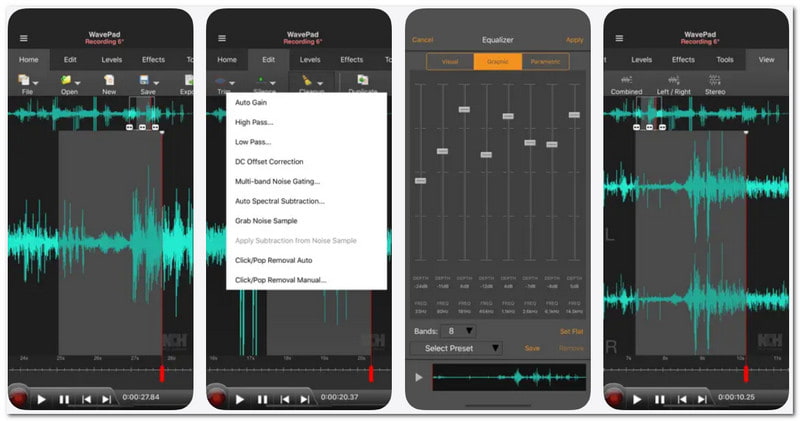
Step 2You can also add more files for merging, or navigate to the Effects menu for amplification and noise reduction. Make sure to tap Save As to export the audio file.
5. Lexis Audio Editor - For Android
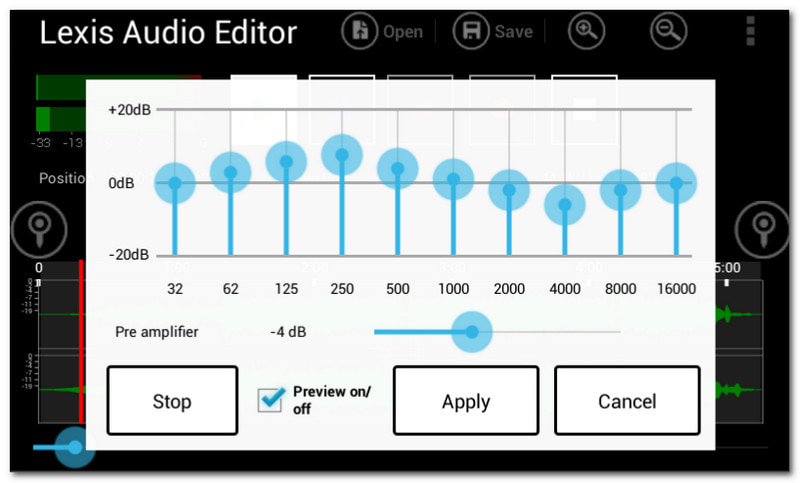
While it is originally for audio recording, Lexis is an excellent alternative for editing WAV files on Android. Other than the basic tools, it can also remove reverb and split audio into vocals and instruments.
Step 1Download the app from Google Play. Open it and load the WAV file. You can start by cutting or copying parts of the audio.
Step 2Next, use its built-in equalizer for advanced editing. There are also other settings which help with noise reduction, normalizing, compressing, and others. Save the new audio to your phone.
Part 4. Which Tool Should You Use?
With the tools provided in this article, you might wonder which one to use. You can check the summary table below to choose what is best for you.
| Tools | Supported Platforms | Best For | Supported Audio Formats |
| AVAide Video Converter | Windows, Mac | Professional editing with an easy learning curve | WAV, MP3, AAC, FLAC, WMA, AIFF, M4A |
| Audacity | Windows, Mac, Linux | Free and open-sourced audio editing | WAV, MP3, AAC, FLAC, WMA, AIFF, M4A |
| AudioMass | Web browsers | Online WAV editing | WAV, MP3, AAC |
| WavePad Audio Editor | iOS | iPhone free WAV editing | WAV, iTunes, OGG, MP3 |
| Lexis Audio Editor | Android | Android WAV editing | WAV, MP3, FLAC, M4A, AAC, and WMA |
Part 5. Pro Tips for Editing WAV Files
It is easy to edit MP3 or WAV files as long as you have the right tool. However, it takes a few tips to make your editing more professional. Try these professional tips to bring efficiency to your WAV editing.
- Organize your audio files by labeling tracks or grouping tracks in related clips. It is also recommended to separate types of audio like dialogue, music background, and effects.
- Ensure to utilize all basic editing options like cutting, trimming, pasting, etc., as they will help define your audio.
- Make room for improvement and do not stop learning. There are many wave editors mentioned in this article to help you achieve the sound you desire.
You have gained knowledge about WAV and how to edit it effectively. There are recommended tools to edit WAV files, and we conclude that AVAide Video Converter is the best software for professional work. Get its free trial version by clicking the Download button.
ABOUT THE AUTHOR

Your complete video toolbox that supports 350+ formats for conversion in lossless quality.