

Can Blu-ray players play DVD? Yes, all standard Blu-ray players can play DVDs. Because Blu-ray hardware is designed to be backwards compatible, the internal drive contains both a blue laser for Blu-rays and a red laser for DVDs. This allows you to enjoy your existing DVD collection while upgrading to high-definition Blu-ray quality. Unless your disc is physically damaged or from an incompatible region, your Blu-ray player will handle DVDs seamlessly.
Part 1: Can a Blu-ray Player Play DVD
Can you play a regular DVD on a Blu-ray player? Yes, absolutely. Most players are built to handle both. The only major hurdle is the Region Code, a security system used by movie studios to regulate where a movie can be watched. Think of it as a geographical lock: if you bought a DVD in Europe (Region 2) but your player is from North America (Region 1), they won't 'talk' to each other. To watch these discs, you’ll need a solution that can bypass these regional locks.

You can check some hardware Blu-ray players that can play DVDs from all regions:
- Sony UBP-X700
- Panasonic DP-UB820
- LG BP175
- Sony BDP-S6700
- Panasonic DP-UB420
Do All Blu-ray Players Play All DVDs?
The short answer is yes. All standard and 4K UHD Blu-ray players are backward compatible with DVDs. However, there are a few critical nuances to keep in mind for a smooth playback experience:
Backward Compatibility: Every Blu-ray player contains a dedicated red laser to read DVDs and a blue/violet laser for Blu-ray discs.
4K UHD Requirements: While a 4K UHD player can play standard Blu-rays and DVDs, a standard Blu-ray player cannot play 4K UHD discs.
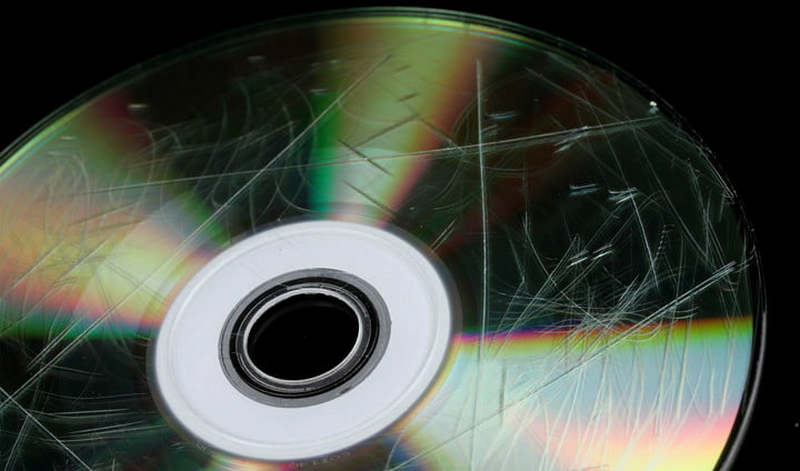
Physical Condition: Scratched or bronzed (deteriorating) older DVDs may fail to load even on the best players.
Why Can Blu-ray players play DVDs?
So, why can your Blu-ray player also handle DVDs? That's because it houses two distinct lasers: a blue one for high-definition Blu-rays and a red one specifically for your classic DVD and CD collections.
Also, Blu-ray players support the MPEG-2 standard, they can read almost any DVD effortlessly. The real magic, however, lies in Video Upscaling. A quality player can take a standard 480p DVD and boost the output to 1080p Full HD, giving your old favorite movies a fresh, modern look.
Part 2: DVD vs. Blu-ray Discs: A Deep Dive into Their Differences
1. Video Resolution & Clarity
Standard DVDs are capped at 480p (Standard Definition). While the short-lived HD DVD format reached 1080p, it has been entirely replaced by Blu-ray, which delivers a native 1080p (Full HD) experience. For the ultimate cinematic view, Ultra HD Blu-ray (4K) provides four times the resolution of standard Blu-ray, supporting HDR (High Dynamic Range) for superior color and contrast that DVDs simply cannot match.
2. Storage Capacity & Data Density
The physical storage limit is the primary reason for the quality gap:
DVD: A standard single-layer disc holds 4.7GB, while dual-layer (DVD-9) discs reach 8.5GB.
Blu-ray: A standard single-layer disc starts at 25GB. Modern Triple-layer (100GB) and Quad-layer (128GB) UHD discs allow for massive amounts of data, essential for 4K video and lossless audio tracks.
Why is Blu-ray Quality Superior to DVD?
The secret lies in the Laser Precision and Data Bitrate:
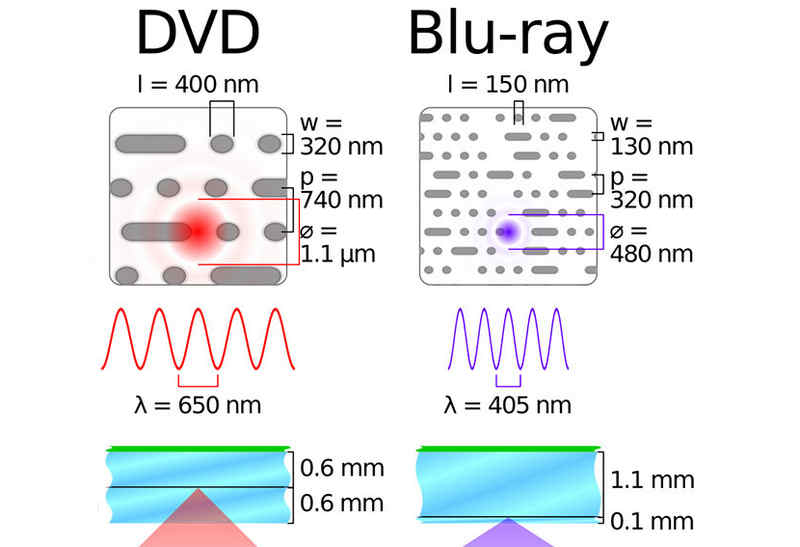
Short Wavelength: Blu-ray uses a 405nm blue-violet laser, which has a much shorter wavelength than the 650nm red laser used for DVDs. This allows the laser to focus on much smaller, more tightly packed data “pits” on the disc.
Higher Bitrate: Because a Blu-ray disc can store more data, it can stream that data at a much higher bitrate (up to 128 Mbps for 4K). This means less video compression, resulting in sharper textures, smoother gradients, and an absence of the “pixelation” often seen in DVDs during fast-motion scenes.
Audio Excellence: Unlike DVDs, which often use compressed AC-3 audio, Blu-rays support lossless formats like DTS-HD Master Audio and Dolby Atmos, providing a truly immersive 3D soundstage.
Part 3: Reasons and Fixes: Why Your Blu-ray Player Won’t Read DVDs
If your Blu-ray player fails to play your DVDs, you can check the following contents to see the causes and possible fixes to troubleshoot the Blu-ray player not playing DVDs issue.
1. Incompatible Region Codes - Before playing your DVD on a Blu-ray player, you should check the region code compatibility between your DVDs and your Blu-ray player. Otherwise, you may result in playback issues. To fix it, you can buy a Blu-ray DVD player or a region-free Blu-ray player.
2. DVDs with Scratches - Before inserting your DVD into a Blu-ray player, you should make sure the disc is clean and compact without any bad scratches or damages. You can use a soft and lint-free cloth to wipe your DVD.
3. Loose Player Connection - You need to check all cables used to connect your Blu-ray player to the TV.
4. Dust in Blu-ray Player - Sometimes, the dust inside your Blu-ray player may affect the DVD playback. You should clean the disc tray and lens on your Blu-ray player.
Pro Tip: Play DVDs on Windows or Mac Without Player Hardware
If you don't have a hardware Blu-ray player, you can still play Blu-rays and DVDs as long as you have a disc drive and a computer. Many professional media player programs can read different types of discs with or without encryption. Windows Media Player won't play DVD without a DVD decoder, but professional players, like AVAide Blu-ray Player, can easily deal with different encryptions on a DVD and play the movie seamlessly without lag or stutter.
AVAide Blu-ray Player is the best program to play Blu-ray and DVD. It has pro-level hardware decoding to play large DVDs, Blu-rays, and other multimedia files without causing too much burden to your computer. You can watch your disc movies without any restriction.
Step 1Click the Free Download button below to download, install, and launch AVAide Blu-ray Player on your computer.

FREE DOWNLOAD For Windows 7 or later
 Secure Download
FREE DOWNLOAD For Mac OS X 10.13 or later
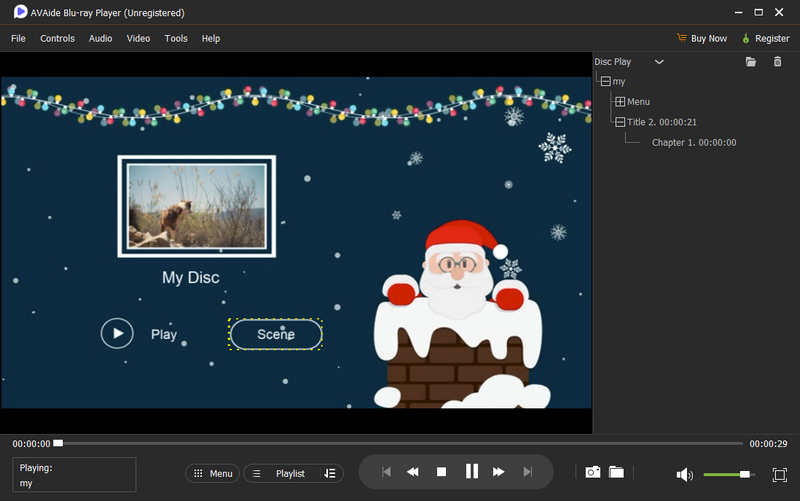
Secure DownloadStep 2Click the Open Disc button to select your DVD. You can also click the Open File button to open other multimedia videos or audio files.

Step 3Your DVD is playing now. You can click the Menu or Playlist button to manage different videos, chapters, and titles. Use your familiar key controls to control the DVD playback.
Part 4: FAQs of Playing DVDs on Blu-ray Players
Will the DVD be damaged When it is played on a Blu-ray player?
No, your Blu-ray player won't do any damage on your discs because it won't rub the surface of your disc.
Will my Blu-ray player upscale my DVDs?
Yes, most Blu-ray players can upscale DVDs and make regular DVDs look better. However, your regular DVDs won't look as clear and detailed as a Blu-ray disc.
Is it better to buy a Blu-ray player or a DVD player?
A Blu-ray player is better. It can play both Blu-rays and DVDs. Moreover, Blu-ray players provide higher video quality and can automatically upscale DVDs.
Can a Blu-ray player play DVD? Yes, you can directly insert your DVD disc into a Blu-ray player and play it. It can well support DVDs. However, not everyone has a Blu-ray player, and a Blu-ray player hardware may get damaged. To deal with that, you don't need to buy another disc player, but purchase a cheap disc drive. Insert your DVDs or Blu-rays into a disc drive, and connect it to your computer. Then, use AVAide Blu-ray Player to open it, and then you can enjoy your movies with cinematic visuals.
ABOUT THE AUTHOR

Full-featured multimedia player to play Blu-rays, DVDs, 4K UHDs, and other video/audio files.