An SVG optimizer kind of reduces the size of vector picture files by stripping out unnecessary bits of code while keeping the same visual quality. This review compares the well-known tools, talks about what each one does best, plus where they fall short, and it also spotlights AVAide Image Compressor for compressing the related JPG, PNG, and GIF image files.
Part 1. What Is SVG and Why Optimize It?
SVG (Scalable Vector Graphics) is basically an image format that relies on XML code to describe shapes, lines, and colors. However, unlike JPEG and PNG, SVG is built on mathematical paths, so the image can be resized without getting blurry. That is why it works great for logos, icons, illustrations, and all those kinds of website graphics.
What Makes SVG Special?
- Scalable quality: The image stays sharp on both mobile screens and huge displays, even when you zoom in.
- Flexible format: It is just code, so you can tweak colors, shapes, and other pieces without starting over.
- Potentially smaller files: For basic vector art, SVG can be lighter than the typical raster images.
Why Optimize SVG Files?
Because those SVGs sometimes carry stuff you do not really need, extra metadata, long comments, hidden elements, or redundant code that quietly adds weight. Optimizing removes the surplus while keeping the same visual result. When they are smaller, websites usually load faster, bandwidth usage goes down, and the whole file management side feels simpler.
Part 2. Understanding SVG Optimization - Lossy vs. Lossless
SVG optimization reduces file size by removing unnecessary code or simplifying graphic elements. The two main approaches are lossless and lossy optimization, each offering a different balance between file size and visual quality.
| Feature | Lossless Optimization | Lossy Optimization |
| How it works | Removes redundant code and unused data | Simplifies paths and reduces precision |
| Visual Quality | Preserves the original appearance | May cause minor visual changes |
| File-size reduction | Usually moderate | Can be greater |
| Best For | Logos, icons, and detailed graphics | Complex graphics needing further compression |
| Main advantage | Maintains visual consistency | Achieves potentially smaller files |
| Main drawback | May offer limited size reduction | Can remove important details if overdone |
Part 3. Top SVG Optimizers Reviewed
1. SVGO
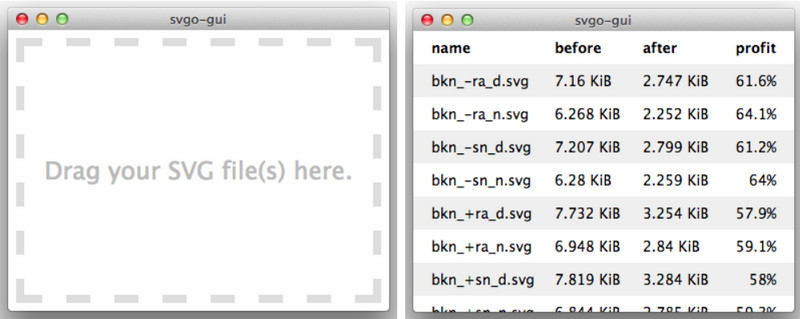
Picking the right SVG optimizer depends on how complex the graphic is, what workflow you like best, and how much reduction you really need. Some tools clean up SVG code straight away, while others show you a more browser-based interface, super simple. The options below cover command-line setups, online optimization, and a couple of complementary image compression methods, too.
- Pros
- It is a free and open-source kinda thing.
- Allows you to use customizable optimization plugins.
- Tends to work pretty well for batch processing.
- Cons
- You kinda need a comfort level with the command line.
- If you prefer a visual interface, it is not as convenient.
2. SVGOMG
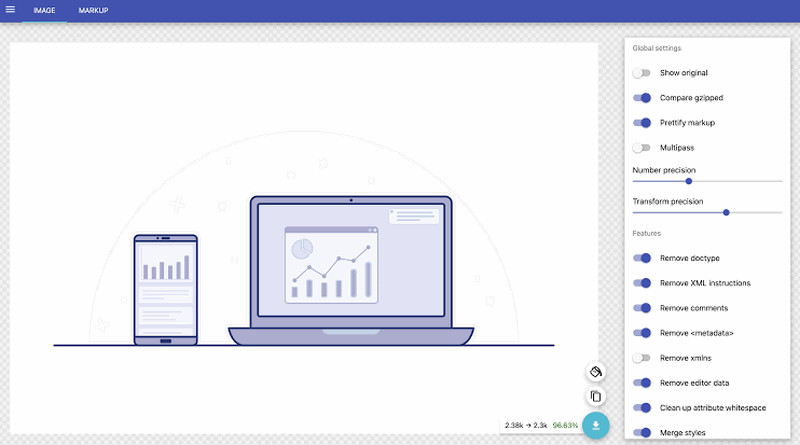
SVGOMG kind of gives you a browser-based interface for SVGO, so SVG optimization becomes easier; you do not have to type the commands in a terminal or anything like that. After that, you can preview the result in the browser, and if it looks right, you can download the optimized file.
- Pros
- Free to use inside a web browser.
- Shows a visual preview of the optimization effects.
- Shows the before vs after file size impact.
- Cons
- The advanced options may feel confusing for beginners.
- More complicated SVGs might need careful checking in the preview.
3. Google Optimize Logo SVG
Google PageSpeed Insights is mostly a page performance testing tool, not really a dedicated SVG optimizer. It tends to point out where image-related performance problems might be lurking, and then gives suggestions to push your speed up.
- Pros
- Free to use for analyzing website performance.
- Helps you gauge overall page speed.
- Good for spotting assets that can affect loading speed.
- Cons
- It does not really come with a dedicated SVG optimization editor.
- The advice changes, depending on the site you are testing.
4. SVG Optimizer by Peter Collingridge
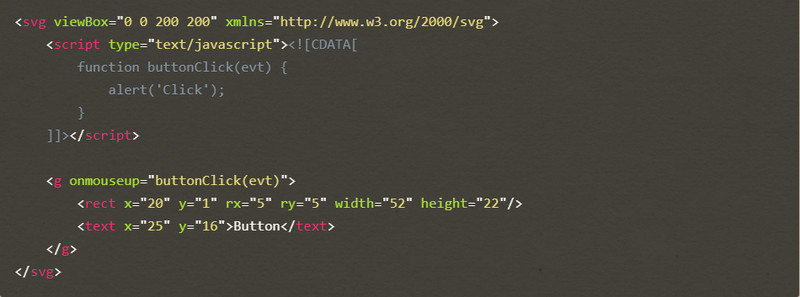
Peter Collingridge SVG Optimizer is a kind of lightweight, web-based tool that helps clean up SVG code. It sorta aims at simplifying the artwork by cutting down on needless decimal precision and also removing attributes that are not actually used so that it can work well for those quick, straightforward optimization chores.
- Pros
- It gives you an easy approach for SVG cleanup.
- It removes extra data and reduces file size, much like tools that compress an image for Discord for easier sharing.
- Good for basic optimization needs, nothing too fancy.
- Cons
- It has fewer advanced controls compared with SVGOMG.
- For really intricate visuals, it might be less suitable.
5. AVAide Image Compressor
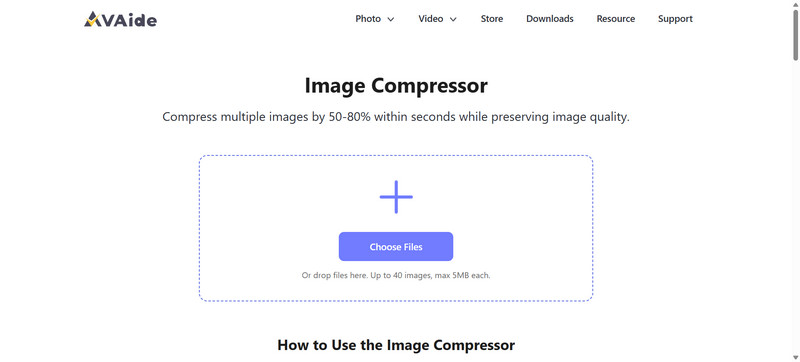
AVAide Image Compressor sort of complements SVG optimization, because it handles raster formats like JPG, PNG, and GIF. It doesn’t really optimize the SVG code itself, but it still helps by shrinking the size of the other images that sit next to vector graphics on websites, in slides, or other digital work.
- Pros
- Beginner-friendly, pretty easy to get going.
- Supports batch compression, which is handy when you have a folder full of files.
- No software installation required, which saves time and hassle.
- Cons
- Compression results vary depending on the original image format and content.
Part 4. Comparison Table of Best SVG Optimizers
Each tool sort of does its own thing, from cleaning SVG code to making website speed better and then compressing raster images, you know. AVAide Image Compressor feels like the best fit for simpler everyday compression tasks, while SVGO and SVGOMG are more tuned to optimizing SVG files straight up.
| Feature | AVAide Image Compressor | SVGO | SVGOMG | PageSpeed Insights | Peter Collingridge SVG Optimizer |
| Primary purpose | Raster image compression | SVG code optimization | Online SVG optimization | Website performance analysis | Basic SVG optimization |
| SVG support | ✓ | ✓ | ✓ | Analysis only | ✓ |
| JPG/PNG compression | ✓ | ✗ | ✗ | Analysis only | ✗ |
| Batch processing | ✓ | ✓ | Depends on workflow | Website-based analysis | Limited |
| Ease of use | Very easy | Advanced | Easy | Easy | Easy |
| Installation required | No | Yes | No | No | No |
Part 5. Troubleshooting Common SVG Optimization Issues
SVG optimization, sure, it can shrink the file size, but if the settings are off, you might notice quality drops, or something breaks in functionality. These usual tweaks can keep your graphics looking tidy and not too heavy.
1. SVG Looks Different After Optimization
If you go super aggressive, the optimizer can delete important attributes, or it can simplify paths, and then the whole design changes a bit.
Fix: Stick with lossless settings and compare the optimized file side by side with the original one. If you also have matching JPG or PNG files, AVAide Image Compressor can assist with reducing those file sizes separately.
2. SVG File Size Barely Changes
Some SVG files already contain minimal code, leaving little room for further optimization.
Fix: Try SVGO or SVGOMG to remove redundant code and unused elements. AVAide Image Compressor can also shrink supporting raster images in batches, while options to compress photos in PowerPoint help reduce presentation file sizes.
3. Colors, Fonts, or Effects Disappear
In some cases, certain optimization settings remove the styles you actually need, including font references or even those little visual effects parts.
Fix: Go back and double-check the options, keep the important attributes intact. Use a vector-oriented SVG optimizer for the drawing code, and use AVAide Image Compressor specifically for the paired JPG, PNG, or GIF files.
Part 6. FAQs About SVG Optimizer Review
Can an SVG optimizer remove hidden information from a file?
Yes, an SVG optimizer can remove hidden information from a file, at least some kinds. For example, certain optimizers are able to strip metadata, comments, and even unused elements that do not show up in the rendered artwork.
Can optimized SVG files still be edited in design software?
Usually yes. Most optimized SVGs stay editable in tools like Adobe Illustrator and Inkscape, though the exact level of editability can change a lot. If the optimizer removes layers, simplifies paths, or turns text into shapes, you might lose some flexibility. So it is a good idea to keep a backup first, just in case you need to make substantial edits later.
How can I check whether an SVG optimizer is safe to use?
Look for its privacy policy, because if it does not say clearly what happens to your graphics, that’s a yellow flag. Then check file-handling practices; some tools might keep copies or process things in ways you did not expect.
When you optimize SVG files, pick a tool that keeps the visuals right while still shrinking the size. SVGO and SVGOMG are meant for vector code, AVAide Image Compressor is more for raster images, so that it can reduce file weight efficiently there, but they’re not in the same category.
ABOUT THE AUTHOR


Reduce the file size of an image online within seconds while preserving the quality. We support JPG, PNG, WEBP, GIF, and more.
PROCESS NOW