

Need to convert M3U8 to MP4? You are not alone. As streaming technology evolves, dealing with HTTP Live Streaming (HLS) playlists like M3U8 has become increasingly common. However, since M3U8 is a playlist file rather than a media format, standard conversion won't work.
You need the right tools to aggregate and transcode these stream segments. In this guide, we will show you exactly how to convert M3U8 playlists to MP4 efficiently and recommend the best media players to open M3U8 links directly without any hassle. Let's dive in.
- Part 1. What is M3U8?
- Part 2. How to Convert M3U8 to MP4 with FFmpeg
- Part 3. How to Change M3U8 to MP4 in VLC
- Part 4. How to Convert M3U8 Video to MP4 with AVAide Video Converter
- Part 5. How to Convert M3U8 to MP4 Online
- Part 6. How to Convert M3U8 Format to MP4 on Android/iPhone
- Part 7. FAQs About Converting M3U8 to MP4
Part 1. What is M3U8?
An M3U8 file is a UTF-8-encoded playlist used by media players to locate and stream audio and video content. Instead of containing actual multimedia data, it is a plain-text file that directs players to specific media sources via local file paths or URLs. While local paths allow playback of files stored on a PC, M3U8 URLs are predominantly used to stream dynamic media over the internet.
Though both are essential in multimedia, M3U8 and MP4 serve entirely different purposes. M3U8 acts as a dynamic streaming index designed for internet broadcasting, whereas MP4 is a universal container format engineered for storing standalone media files with maximum cross-platform compatibility.
You can check a simple comparison table to quickly view the difference between M3U8 and MP4.
| Feature | M3U8 Playlist | MP4 Container |
| Data Content | Plain-text links and indexes (No actual video/audio data). | Compressed video, audio, subtitles, and metadata. |
| Primary Purpose | Dynamic HTTP Live Streaming (HLS) over the internet. | Local media storage, sharing, and playback. |
| Compatibility | Requires HLS-compatible players or streaming engines. | Universally compatible with almost all devices and OS. |
Part 2. How to Convert M3U8 to MP4 with FFmpeg
FFmpeg is a powerful, open-source multimedia framework capable of decoding, encoding, transcoding, muxing, and streaming almost any media format. It provides a robust solution for converting M3U8 playlists to MP4 with zero quality loss.
However, unlike conventional video converters, FFmpeg lacks a graphical user interface (GUI). It operates entirely via a Command-Line Interface (CLI), which introduces a steep learning curve. While tech-savvy users swear by its speed and flexibility, beginners may initially find the syntax confusing.
If you are ready to leverage this professional-grade tool, follow the step-by-step terminal commands below to convert your M3U8 streams to MP4.
Step 1First, download FFmpeg from the official website (www.ffmpeg.org). Extract the downloaded ZIP file to a safe location on your computer (e.g., C:\ffmpeg). To ensure you can run FFmpeg from any folder, remember to add its bin folder path to your Windows System Environment Variables (PATH).
Step 2Press the Windows Key, type cmd (or Terminal), and press Enter to open a standard Command Prompt. Before downloading, navigate to the folder where you want to save the final video using the cd command. For example: cd C:\Users\YourUsername\Videos
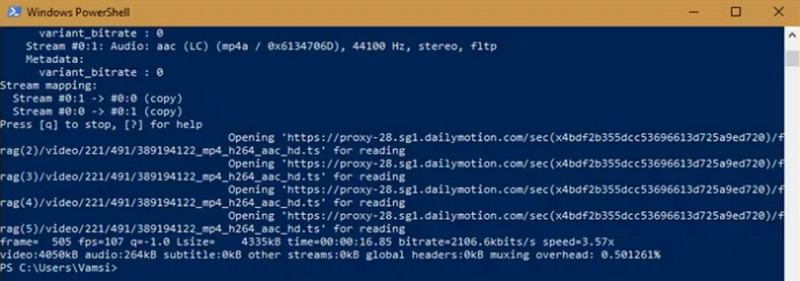
Step 3Copy your M3U8 playlist URL. Paste the following command into your terminal, making sure to wrap your URL in double quotes to prevent syntax errors caused by special characters: ffmpeg -i "https://your-m3u8-url/playlist.m3u8" -c copy -bsf:a aac_adtstoasc output.mp4
Replace the placeholder URL with your actual link. The -c copy flag ensures a lightning-fast process by merging the stream without quality-losing re-encoding.
Step 4Once the stream tracking and downloading finish (the command line will stop scrolling and show a summary), simply open your chosen destination folder to find your fully compatible, standalone MP4 video.
Part 3. How to Change M3U8 to MP4 in VLC
Another way to convert the M3U8 file to MP4 format is through VLC Media Player. VLC is a well-known free and open-source media player that can play various media formats. You can use it to play your playlist in an M3U8 format and convert it into MP4 format.
Since M3U8 is not a playback-friendly format, converting it to MP4 is a wise choice to ensure compatibility with other devices. VLC Media Player is an excellent, free tool to achieve that. The main drawback is that its interface can be slightly confusing for beginners. Follow the steps below to use this tool to change your M3U8 link to MP4 safely.
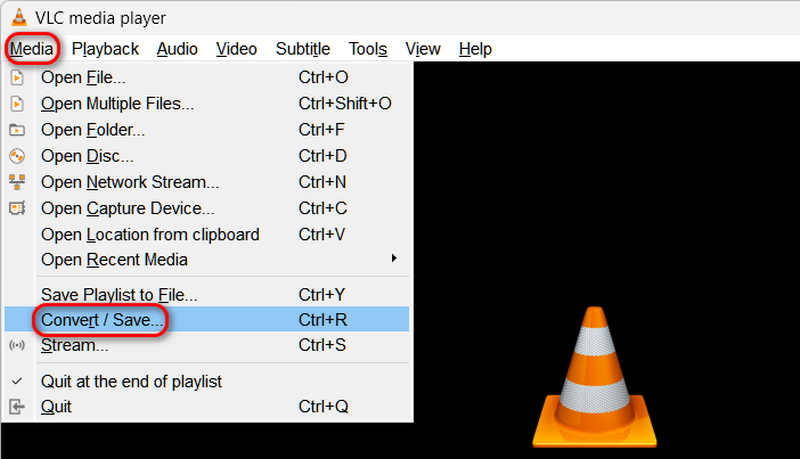
Step 1Launch VLC on your computer. Then, select Media at the upper-right tab. Now, from the drop-down menu, select the Convert / Save option.
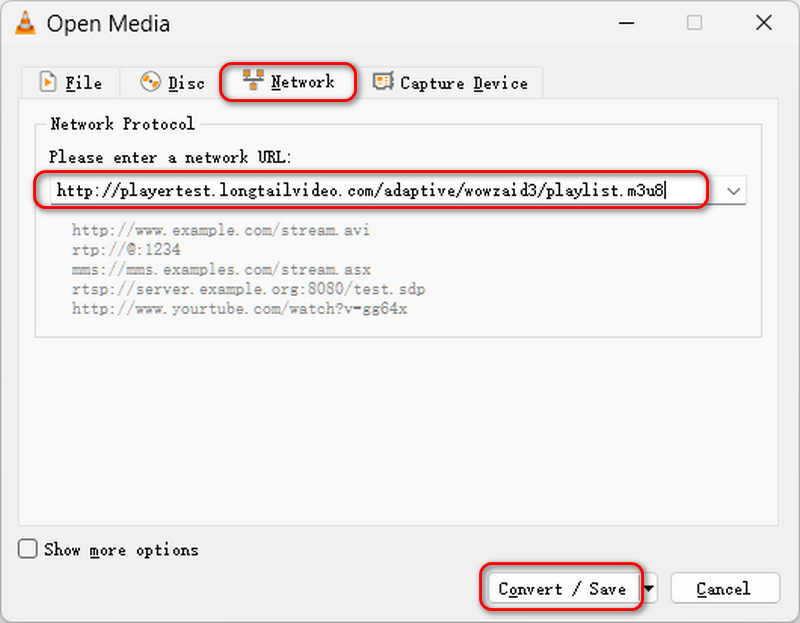
Step 2Select the Network tab at the top side. Then, paste your M3U8 playlist URL and click the Convert / Save button on the bottom side.
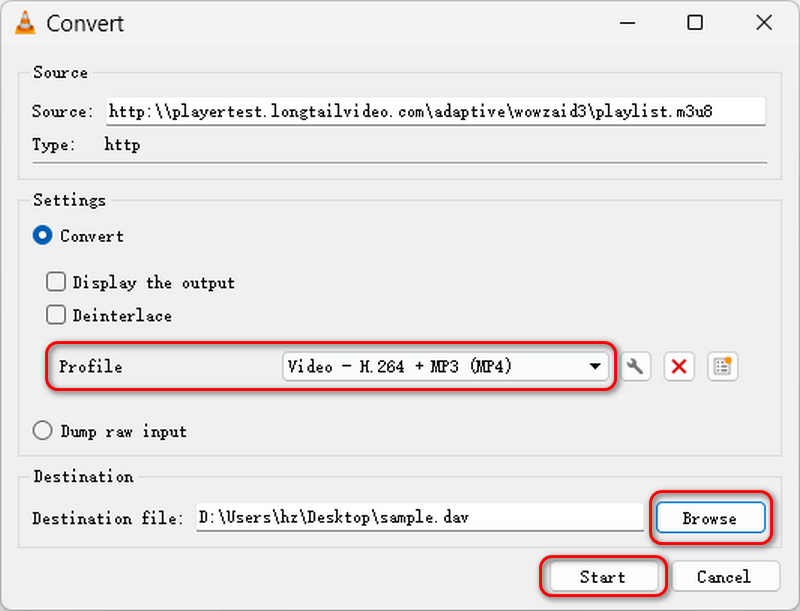
Step 3Click the Profile dropdown list to select a desired output preset, like Video – H.264 + MP3 (MP4). If you want to save the original video and audio streams, click the Edit selected profile button (with a wrench icon) to select Copy original video track in Video codec and Copy original audio track in Audio codec. Finally, click the Browse button to select a destination folder for your MP4 videos and click the Start button to download M3U8 to MP4 in VLC.
Part 4. How to Convert M3U8 File to MP4 with AVAide Video Converter
If the downloaded M3U8 videos cannot play or have very large file sizes, you should try AVAide MP4 Converter to convert the videos to MP4 with standard configurations. Whether you are a beginner or a pro, you can use this tool to convert M3U8 formats to MP4 easily and efficiently.
The tool offers a wide range of versatile features and functions that everyone will find easy to navigate. What's more, this tool has an intuitive interface, so you can easily change M3U8 to MP4 in one click by pressing the corresponding buttons. AVAide MP4 Converter can convert video to any format, such as MKV, AVI, WMV, MOV, 3GP, etc. Additionally, it enables you to convert video to audio and vice versa.

FREE DOWNLOAD For Windows 7 or later
 Secure Download
FREE DOWNLOAD For Mac OS X 10.13 or later
Secure DownloadLet's follow the steps below to convert M3U8 to MP4 with high quality:
Step 1Free download this M3U8 converter from either the official website or the corresponding buttons above. Launch it after installation.
Step 2Click Add Files in the top-left corner of the main interface. Upload the M3U8 files you want to convert. You can also drag and drop the file into this tool.
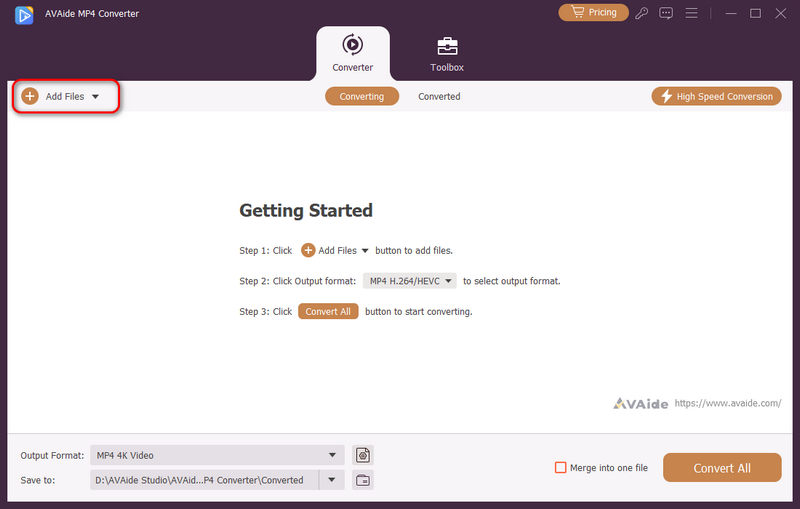
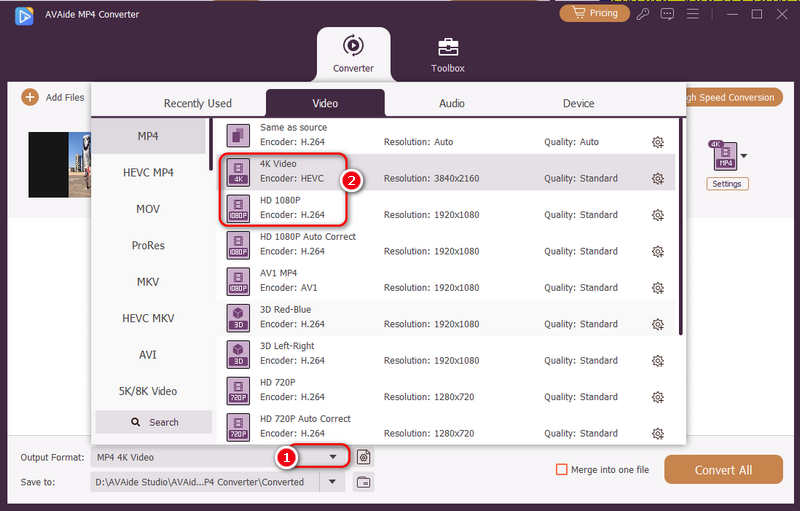
Step 3Click the dropdown button next to the Output Format option to choose your desired video formats. To convert M3U8 to MP4, you should choose an MP4 format, such as 4K MP4 and HEVC MP4.
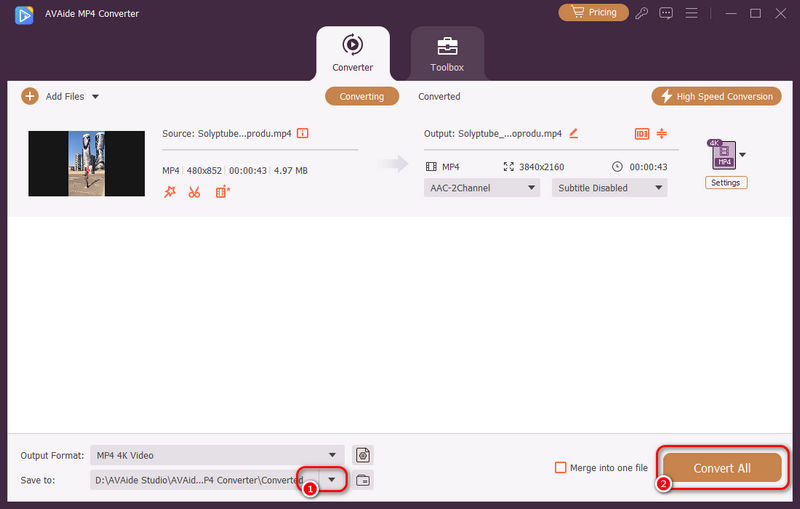
Step 4Select a saved path for the files to be exported. Then, click the Convert All button in the bottom-right corner to start the M3U8 to MP4 conversion.
Part 5. How to Convert M3U8 to MP4 Online
Additionally, you can convert M3U8 to MP4 online. One of the tools that can help you convert your files is Online-Convert. This method will not require installing software, but note that you must have a good internet connection during the conversion process. Using this tool, you can upload an M3U8 file through your local computer, Google Drive, Dropbox, or video URL. Here’s a simple step on how to change M3U8 to MP4 online:
Step 1Go to the official webpage of video.online-convert.com/convert-to-mp4.
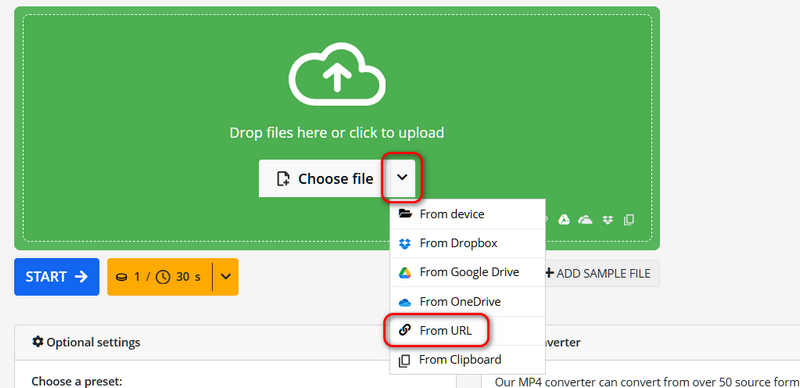
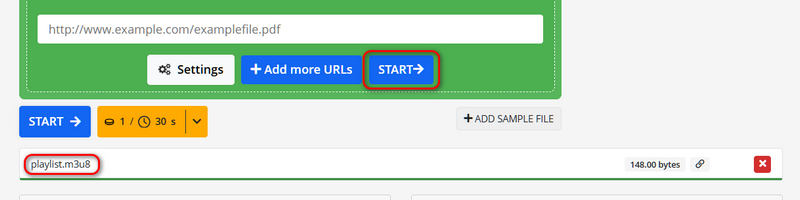
Step 2Click the Choose file dropdown button and select From URL.
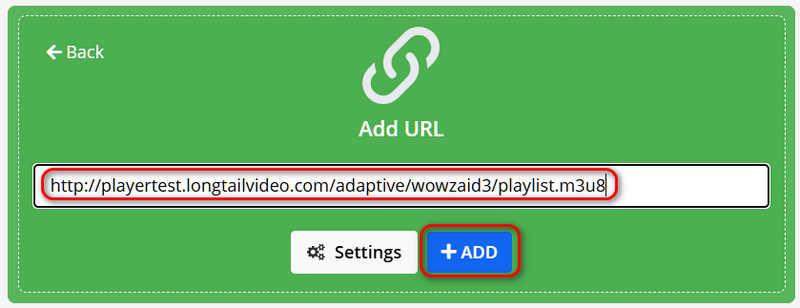
Step 3Paste your .m3u8 link in the box and click the Add button to import the videos.
Step 4You can see that your m3u8 playlist is added. Since the online M3U8 to MP4 converter downloads the original video and audio streams, you just need to click the START button to directly convert M3U8 to MP4 online.
Part 6. How to Convert M3U8 Format to MP4 on Android/iPhone
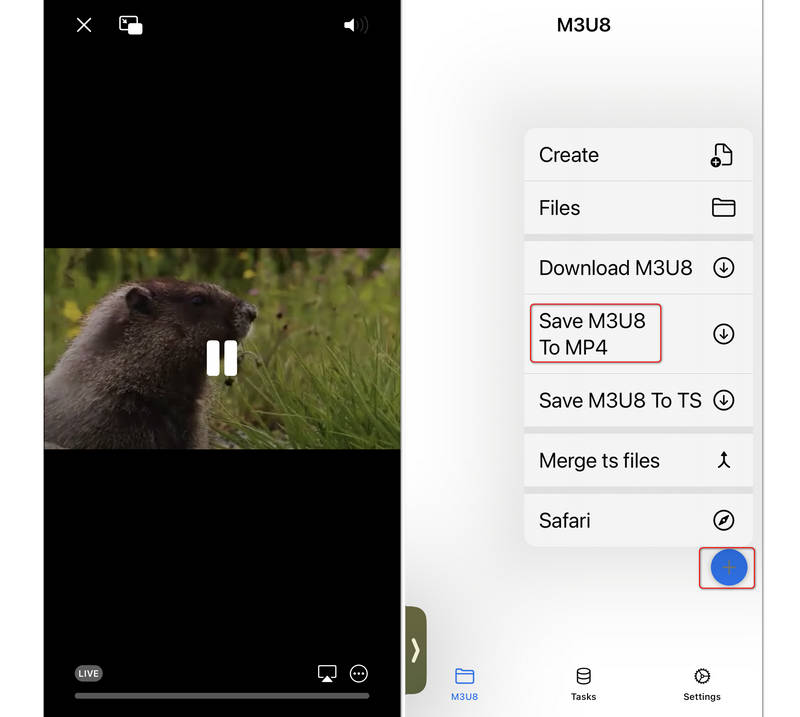
It is easy to find an M3U8 player on Android or iOS, like VLC Media Player. But to download M3U8 to MP4, you'll need a dedicated downloader, for most mobile players, like VLC, don't have a network video downloader feature. Here, let's take M3U8 Mpjex (on iOS) as an example to show you how to download M3U8 as MP4 on a phone.
Step 1Paste your .m3u8 playlist url in a browser to play the video.
Step 2Launch M3U8 Mpjex on your phone, and you'll see an Add button.
Step 3Tap the Add button and tap Save M3U8 To MP4 to directly download the video as MP4.
Part 7. FAQs About Converting M3U8 to MP4
Why can't I convert M3U8 to MP4?
When you fail or experience lag when converting M3U8 to MP4, it might be due to an unstable network or disconnection of the source video stream.
Can Windows Media Player open M3U8 video files?
Absolutely, yes! Technically, Windows Media Player plays M3U8 files.
Why VLC can't convert M3U8 to MP4?
If VLC cannot convert M3U8 to MP4, that means the original video is removed from the .m3u8 link, or the video is not supported by VLC, or the .m3u8 link is DRM protected.
How to play M3U8 on Chrome?
To play M3U8 files in Google Chrome, you can use M3U8 Chrome extensions like Native HLS Playback. By installing the extension, you can seamlessly watch M3U8 streams without needing an external media player.
What is the difference between M3U and M3U8 files?
The key difference between M3U and M3U8 files is that M3U is widely known for using different standards. Whereas M3U8 explicitly uses UTF-8. M3U contains references to audio files, while M3U8 files are commonly associated with HTTP Live Streaming (HLS) and are more suitable for adaptive streaming.
Can I download M3U8 files with VLC?
Of course, yes. You can use VLC to capture and download M3U8 streams as local files.
Overall, these are 5 ways to convert M3U8 format to MP4. With the help of these ways, you can now efficiently change the M3U8 format to be compatible across different devices. After converting, if you need to compress the large files, upscale the resolution, or convert the format to make it widely playable, you can use AVAide MP4 Converter. It supports any type of input video format and converts it to standard high-quality MP4 videos.
ABOUT THE AUTHOR

A multifunctional MP4 converter to convert any video format to MP4 with high output quality.