

Ich versuche herauszufinden Wie man Audio auf einem Mac aufnimmt Das kommt häufig vor, wenn man schnell eine Vorlesung aufzeichnen, einen Videoanruf speichern, einen Podcast aufnehmen oder Sprachaufnahmen erstellen möchte. Glücklicherweise bietet macOS integrierte Aufnahmewerkzeuge, und diverse Drittanbieter-Optionen ermöglichen die einfache Aufnahme von hochwertigem Mikrofon- und internem Audio.
Methode 1: Verwendung des QuickTime Players
Fast jeder hat QuickTime auf seinem macOS installiert. QuickTime bietet eine intuitive Benutzeroberfläche, zuverlässige Mikrofonaufnahmen und schnelle Exportfunktionen, für die keine weitere Anwendung benötigt wird. Diese Technik eignet sich für Voice-Overs, Vorlesungen, Online-Meetings und sogar einfache Podcast-Aufnahmen.
Schritt 1Starten Sie QuickTime Player entweder aus dem Ordner „Programme“ oder über die Spotlight-Suche.
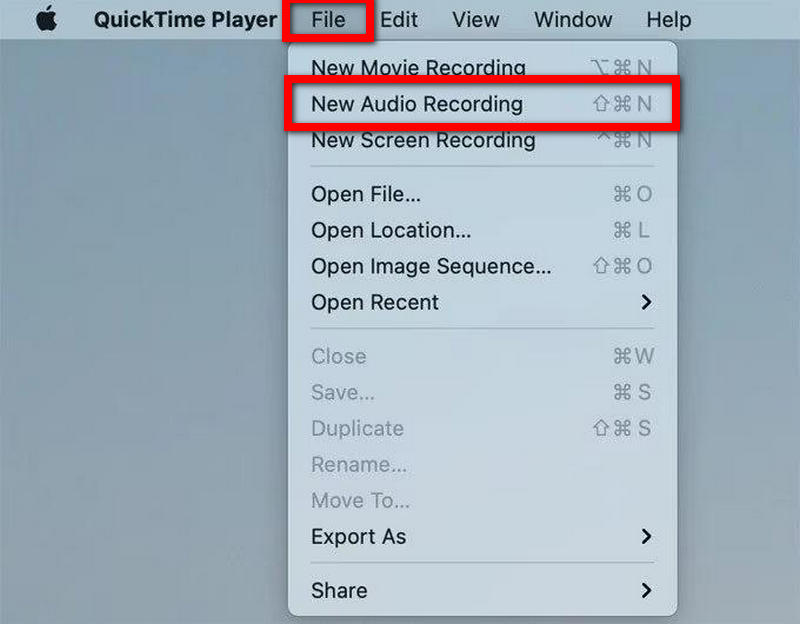
Schritt 2Gehe zum Datei Menü aus der oberen Menüleiste.
Schritt 3Klicken Neue Audioaufnahme.
Schritt 4Drücken Sie den kleinen Pfeil neben dem Schallplatte Schaltfläche zur Auswahl des gewünschten Mikrofons.
Schritt 5Passen Sie gegebenenfalls die Eingangslautstärke an.
Schritt 6Um mit der Aufnahme zu beginnen, drücken Sie die Schallplatte Taste.
Schritt 7 Sprich ins Mikrofon.
Schritt 8Drücken Sie die Stoppen Taste zum Beenden der Aufnahme.
Schritt 9Um die Aufnahme auf Ihrem Mac zu speichern, gehen Sie zu Datei und auswählen Speichern.
Methode 2: Verwendung von Sprachmemos
Die Sprachmemos-App ist ideal für schnelle Sprachaufnahmen. Sie eignet sich hervorragend für persönliche Erinnerungen, Brainstorming, kurze Vorträge und kurze Audioaufnahmen. Aufgenommene Sprachmemos werden automatisch über iCloud synchronisiert und sind somit auf allen Apple-Geräten verfügbar.
Schritt 1Starten Sie die Sprachmemos-App auf Ihrem Mac.
Schritt 2Drücken Sie die Schallplatte Taste.
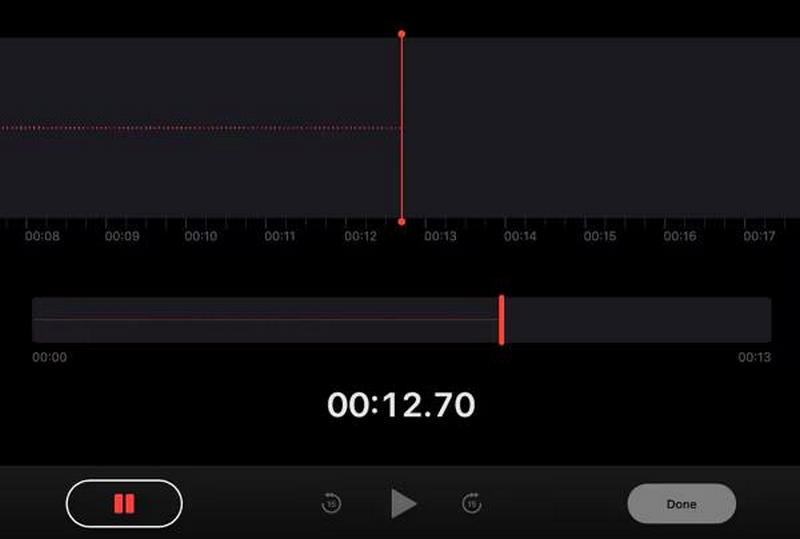
Schritt 3Sprechen Sie ins Mikrofon.
Schritt 4Wenn Sie die Aufnahme kurz unterbrechen müssen, wählen Sie Pause.
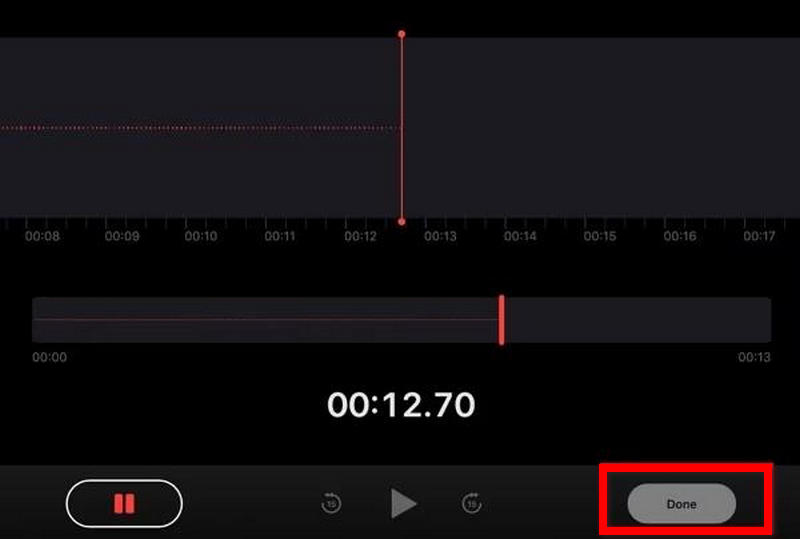
Schritt 5Drücken Sie Fertig um die Aufnahme zu beenden.
Schritt 6Um die Aufnahme leichter zu finden, wählen Sie die Umbenennen Möglichkeit.
Schritt 7Um die Aufnahme zu teilen, zu duplizieren oder zu exportieren, klicken Sie mit der rechten Maustaste auf die Datei.
Warum macOS die interne Audioaufnahme nicht nativ unterstützt
macOS erlaubt standardmäßig die Nutzung des Mikrofons. Allerdings ist es mit den integrierten Funktionen nicht möglich, interne Systemaudiodaten aufzunehmen. Dies betrifft Medienwiedergabe in Apps, Musik und Browsertöne. Datenschutz, Urheberrechtsschutz und Systemsicherheit sind die Gründe für diese Einschränkungen unter macOS.
Im Gegensatz zu Mikrofon-Audio können interne Audiodateien geschützte Medien oder private Kommunikation von Apps enthalten. Aus diesem Grund beschränkt Apple den Zugriff auf interne Audiokanäle, sofern Benutzer keine zusätzliche Software installieren.
Aufgrund dieser Probleme können Programme wie QuickTime keine internen Audioaufnahmen machen, externe Audioaufnahmen über ein Mikrofon sind jedoch möglich.
Beispiele für diese Probleme:
- Videospiele mit Ton aufnehmen.
- Zeichnen Sie eine Online-Vorlesung auf.
- Online-Audio- und Videoaufnahmen erstellen.
- Audio von einem Online-Video im Web aufnehmen.
- Lehrvideos mit internem Computer-Audio aufnehmen.
Methode 3: Verwendung von BlackHole + QuickTime Player
BlackHole ist ein kostenloser virtueller Audiotreiber, der es ermöglicht, Systemaudio intern an Aufnahmesoftware weiterzuleiten. In Kombination mit QuickTime können Mac-Nutzer so sowohl internes Audio als auch Audio von externen Mikrofonen aufnehmen. Mit diesem Treiber lassen sich Online-Meetings, Tutorials, Videospiele, Webinare, Podcasts und Browser-Audio in hoher, klarer Qualität aufzeichnen.
Schritt 1Laden Sie BlackHole von der offiziellen Website herunter und installieren Sie es auf Ihrem Mac. Öffnen Sie anschließend das Audio-MIDI-Setup.
Schritt 2Erstellen Sie ein Multi-Output-Gerät und aktivieren Sie sowohl Ihre Mac-Lautsprecher oder -Kopfhörer als auch BlackHole.
Schritt 3 Stellen Sie in den Soundeinstellungen das Multi-Output-Gerät als Standard-Audioausgabegerät ein.
Schritt 4QuickTime Player öffnen, auswählen Datei > Neue Audioaufnahme, dann wähle Schwarzes Loch als Mikrofon oder Audioquelle.
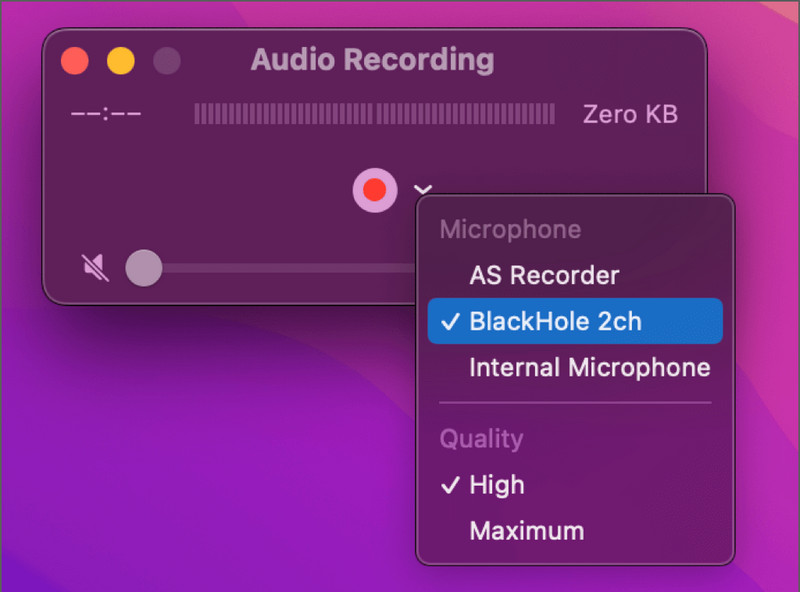
Schritt 5Drücke den Schallplatte Drücken Sie die entsprechende Taste, spielen Sie die gewünschte Audiodatei ab und stoppen und speichern Sie die Aufnahme nach Abschluss.
Methode 4: Verwendung spezieller Drittanbietersoftware
1. AVAide-Bildschirmrekorder
AVAide Screen Recorder AVAide ist ideal für Mac-Nutzer, die ein einfaches, aber leistungsstarkes Tool zur Sprach- und Audioaufnahme suchen. Neben Bildschirmaufnahmen kann AVAide auch Audio von Mikrofon, Systemlautsprechern, Webcam und dem Smartphone-Bildschirm aufnehmen. Besonders hervorzuheben ist, dass AVAide sowohl für Anfänger als auch für fortgeschrittene Nutzer geeignet ist und sich somit hervorragend für alle eignet, die Sprachaufnahmen auf einem Mac machen möchten.
- Nimmt gleichzeitig sowohl das Mikrofon- als auch das Systemaudio auf.
- Unterstützt hochwertige Audioaufnahmen mit minimaler Verzögerung.
- Ermöglicht die Aufnahme im Vollbildmodus, in einem Fenster oder in einem benutzerdefinierten Bereich.
- Beinhaltet Webcam-Aufnahmen für Tutorials und Podcasts.
- Unterstützt zahlreiche Exportformate wie MP3, AAC, FLAC, M4A und mehr.

 Sicherer Download
Schritt 1Laden Sie die Software herunter und installieren Sie sie
Rufen Sie die AVAide-Website auf, um die Software herunterzuladen. Folgen Sie den Anweisungen auf dem Bildschirm, um die Software erfolgreich zu installieren.
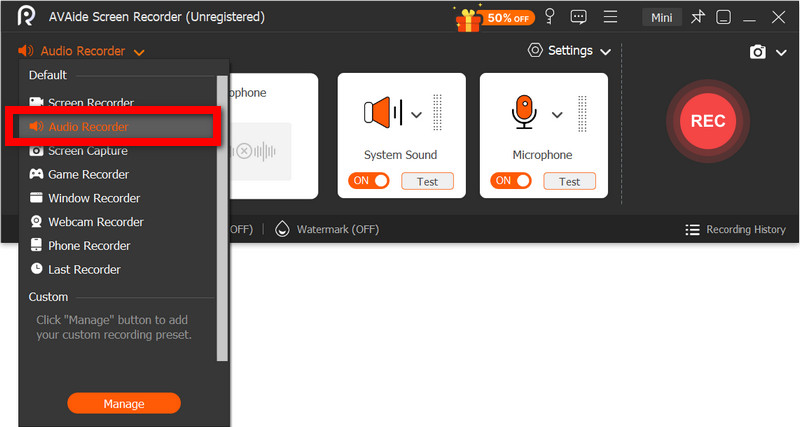
Schritt 2Wählen Sie Audiorecorder
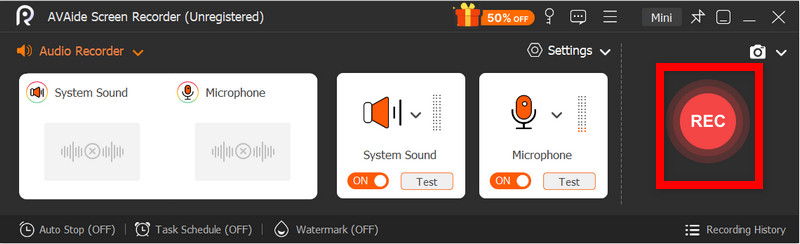
Öffnen Sie die Software und wählen Sie auf der Hauptseite Folgendes aus: Audiorecorder Nur Sprachaufnahmen.
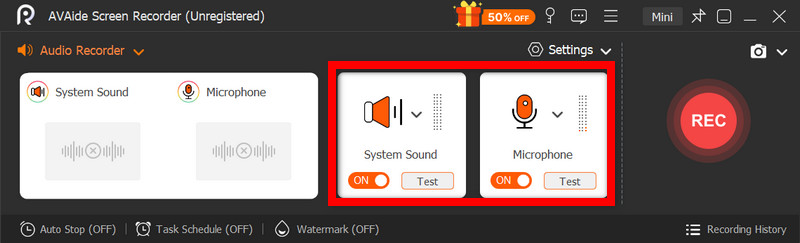
Schritt 3Mikrofon und Systemton aktivieren
Aktivieren Sie die Mikrofon Option zur klaren Sprachaufnahme. Aktivieren Sie die Option. Systemton um den internen Ton Ihres Macs aufzunehmen.
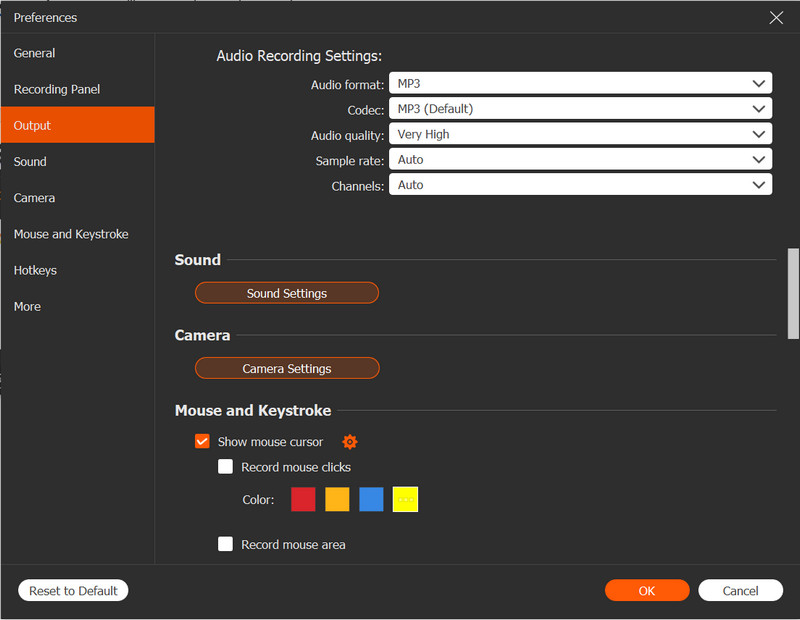
Schritt 4Aufnahmeeinstellungen anpassen
Von dem Einstellungen Im Menü wählen Sie Ihr bevorzugtes Audioformat und die Ausgabequalität. Legen Sie den Speicherort fest und passen Sie die Lautstärke für Mikrofon und Systemaudio an.
Schritt 5Starte die Aufnahme
Wähle aus AUFN Sie haben die Möglichkeit, Ihre Sprachaufnahme zu starten. Während der Aufnahme können Sie diese pausieren, fortsetzen oder Notizen hinzufügen.
Schritt 6Speichern und Vorschau
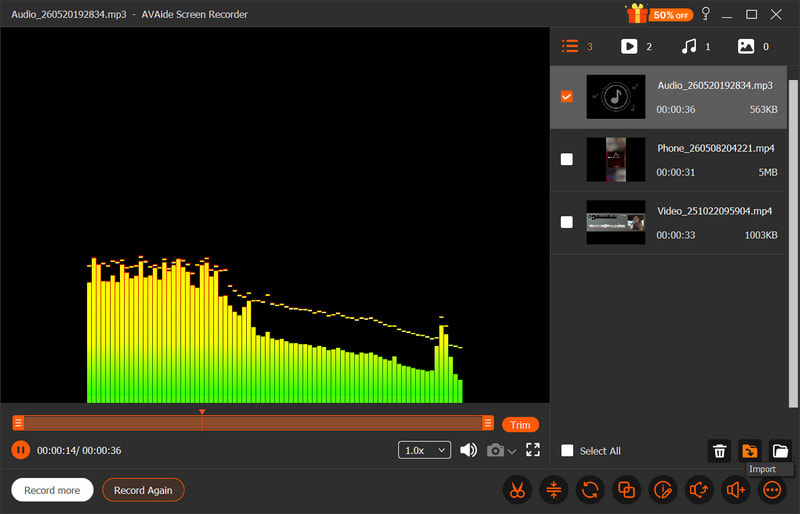
Wähle aus Stoppen Sie haben die Möglichkeit, die Audioaufnahme zu beenden. Anschließend können Sie die Audiodatei kürzen und die aufgenommene Audiodatei auf Ihrem Mac speichern.
2. Verwendung von Audacity
Audacity ist ein benutzerfreundliches, leistungsstarkes und kostenloses Audioaufnahme- und Bearbeitungsprogramm für Mac. Aufgrund seiner einfachen Bedienung und professionellen Funktionen wie Rauschunterdrückung, Schneiden und Audiooptimierung wird es oft anderen Programmen für Podcasts und Musikprojekte vorgezogen. Trotz all dieser Funktionen bietet Audacity eine intuitive Benutzeroberfläche und ist daher ideal für Einsteiger.
Schritt 1Laden Sie Audacity herunter und installieren Sie es auf Ihrem Mac. Öffnen Sie die App, sobald die Installation abgeschlossen ist.
Schritt 2Wählen Sie Ihren Audioeingang. Stellen Sie den Eingang auf Ihr Audiogerät ein und passen Sie den Aufnahmepegel an.
Schritt 3Wenn Sie bereit sind, aufzunehmen, drücken Sie die Taste Schallplatte Drücken Sie die Taste und beginnen Sie, in Ihr Mikrofon zu sprechen.
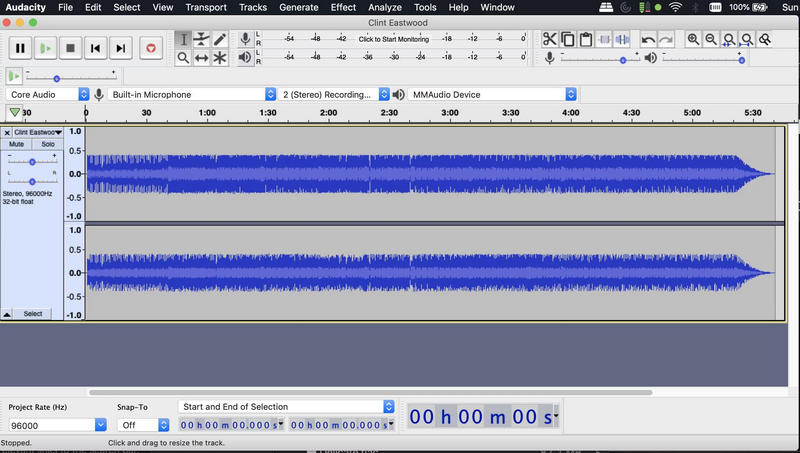
Schritt 4Wenn die Aufnahme beendet ist, drücken Sie die Taste Stoppen Taste.
Schritt 5Wenn Sie mit der Aufnahme zufrieden sind, wählen Sie das Projekt aus, das Sie exportieren möchten, indem Sie zu Datei > Export. Auswählen MP3, WAVoder eine andere Audioexportoption.
3. GarageBand verwenden
Eine hervorragende Alternative zu Audacity ist GarageBand, eine Apple-eigene App, die auf allen Macs vorinstalliert ist. GarageBand bietet dieselben Funktionen wie Audacity und darüber hinaus weitere, wie beispielsweise Musikwerkzeuge und Audioeffekte. GarageBand eignet sich sogar noch besser für Musikproduktionen und ist weit verbreitet. Podcast aufnehmen Sessions, Voiceovers und hochwertige Audioprojekte mit professioneller Tonsteuerung.
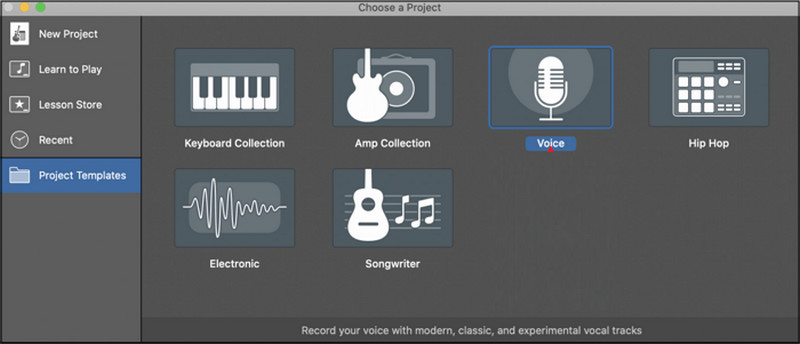
Schritt 1Starten Sie GarageBand und wählen Sie „Neues Projekt“ aus. Stimme.
Schritt 2Wählen Sie den Eingang aus, mit dem Sie aufnehmen möchten. Aktivieren Sie optional die Audioüberwachung, um Ihre Stimme während der Aufnahme zu hören.
Schritt 3Getroffen haben Schallplatte und beginnen Sie Ihre Sitzung.
Schritt 4Wenn Sie mit der Aufnahme fertig sind, drücken Sie die Taste Stoppen Schaltfläche. Verwenden Sie die Bearbeitungs- und Klanganpassungsfunktionen in GarageBand, um Ihre Aufnahme zu optimieren.
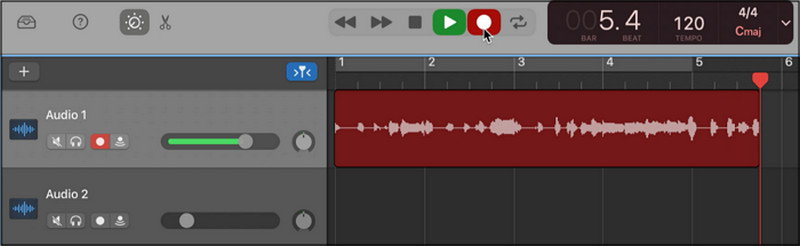
Schritt 5Exportieren Sie das fertige Audioprojekt in der gewünschten Qualität und im gewünschten Format auf Ihren Mac.
Bonus-Tipps
1. So nehmen Sie Audio von YouTube auf dem Mac auf
Um YouTube-Audio, Online-Kurse, Webinare sowie die Wiedergabe von Podcasts und Musik auf Ihrem Mac aufzunehmen, können Sie OBS Studio verwenden, eine kostenlose Aufnahmesoftware für Bildschirmvideos und Livestreams. Da OBS Studio qualitativ hochwertige Aufnahmen von Systemtönen ermöglicht, ist es eine hervorragende Option.
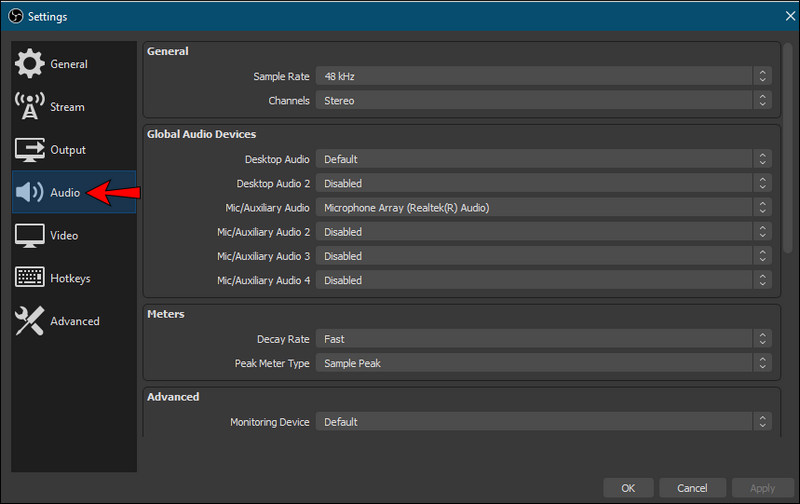
Schritt 1Laden Sie OBS Studio auf Ihren Mac herunter und installieren Sie es. Öffnen Sie die Software nach der Installation.
Schritt 2Erstellen Sie eine neue Quelle in der Audio Wählen Sie anschließend Ihr System-Audiogerät oder Ihren virtuellen Audiotreiber aus.
Schritt 3Öffne YouTube im Browser und lade das Video/Audio, das du aufnehmen möchtest.
Schritt 4Schlagen Sie die Starte die Aufnahme Drücken Sie die Schaltfläche und spielen Sie dann das YouTube-Video/die Audiodatei normal ab.
Schritt 5Warten Sie, bis die gewünschte Audioaufnahme abgeschlossen ist, und drücken Sie dann die Taste. Stoppen Drücken Sie die entsprechende Schaltfläche und suchen Sie die Audiodatei, die jetzt auf Ihrem Mac gespeichert ist.
2. So nehmen Sie Audio auf einem Mac mit einem externen Mikrofon auf
Audioaufnahmen von externen Mikrofonen bieten in den meisten Fällen eine höhere Audioqualität als das interne Mikrofon eines Macs. USB-Mikrofone lassen sich direkt mit einem Mac verbinden. XLR-Mikrofone hingegen benötigen unter Umständen ein Audio-Interface für eine bessere Klangqualität und geringeres Rauschen. bester Bildschirmrekorder für Mac kann auch dazu beitragen, klarere Aufnahmen zu erzielen, wenn Audio- und Videoaufgaben kombiniert werden.
Schritt 1Schließen Sie Ihr ausgewähltes Mikrofon an Ihren Mac an und öffnen Sie ihn. Systemeinstellungen, gehen Sie zu Klangund stellen Sie das soeben angeschlossene Mikrofon als Eingabegerät ein.
Schritt 2Stellen Sie den Mikrofon-Eingangspegel ein und testen Sie den Ton, um sicherzustellen, dass Ihre Stimme klar erkannt wird.
Schritt 3Öffnen Sie Ihre bevorzugte Aufnahmesoftware, z. B. AVAide Screen Recorder.
Schritt 4Wählen Sie in den Softwareeinstellungen das externe Mikrofon aus und beginnen Sie mit der Sprach- oder Audioaufnahme.
Schritt 5Stoppen Sie die Aufnahme, überprüfen Sie die Klangqualität und speichern oder exportieren Sie die endgültige Audiodatei auf Ihren Mac.
Mac-Sprache aufnehmen Ob Sie nun integrierte Tools wie QuickTime und Sprachmemos nutzen oder professionelle Software für Aufnahmen verwenden möchten – diese Methoden bieten zuverlässige Möglichkeiten, um auf Ihrem Mac effizient klaren Ton aufzunehmen. Egal ob Sie interne Audioaufnahmen, Podcast-Kommentare oder Aufzeichnungen von Online-Vorlesungen benötigen, diese Methoden ermöglichen es Ihnen.
ÜBER DEN AUTOR

Erfassen Sie Bildschirmaktivitäten mit Audio, Online-Meetings, Gameplay-Videos, Musik, Webcam usw.
Audio Aufnahme