

Gigapixel AI remains one of the most recognized image-upscaling tools, but many users now wonder if it is still worth it with so many new AI upscalers available. The software continues to deliver sharp, detailed enlargements and reliable offline processing, making it a strong choice for photographers, designers, and professionals who need high-quality results. However, its hardware demands and pricing push some users to explore lighter or more affordable options. This article reviews Gigapixel AI in detail and compares the best alternatives you can use today.
Part 1. Main Features of Gigapixel AI
What sets Gigapixel AI apart and makes it stand out from the competition is the range of its capabilities and the performance of the software, and that is where we begin.
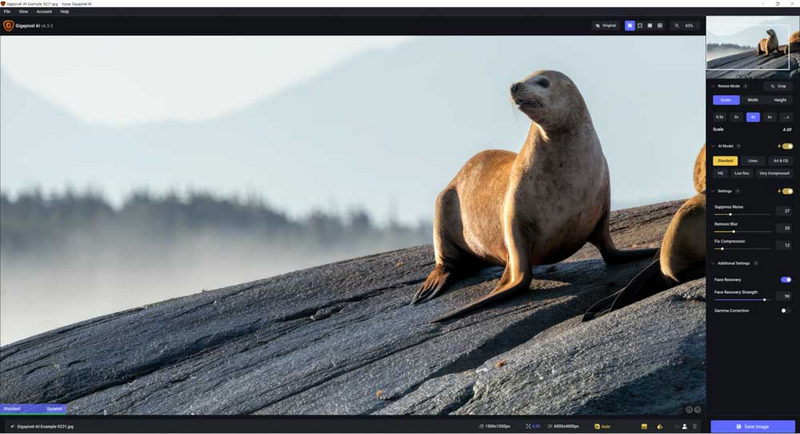
- • Image Resize and AI Upscaling: Utilizes cutting-edge technology and deep learning algorithms to upscale images up to 600% and retain definition and detail.
- • Restoration of Details and Textures: Standard resizings cause fine details to get lost, and lost details like small structures, the fibers of a fabric, and individual strands of hair get completely lost.
- • Portrait Enhancement and Face Recovery: Old photos and headshots look better and more natural after fast and easier facial details in portraits get added when enlarging.
- • Batch Processing: Multiple images can be upscaled at the same time, and that makes it easier to process large quantities of photos than doing one at a time in a time-consuming manner.
- • Works Standalone or as Plug-in: Use of Gigapixel can run independently on its own, as well as can also be easily integrated with other software like Photoshop and Lightroom as a plug-in on Mac or Windows.
- • Offline Processing: It is easier to process large files without having to suffer the inconveniences of uploading to the Internet if all of the processing is done on your own device.
Part 2. Detailed Review of Gigapixel AI
Now let us take a look at Gigapixel AI user experience and platform, pros and cons, and of course, the pricing, to see if it will be worth it.
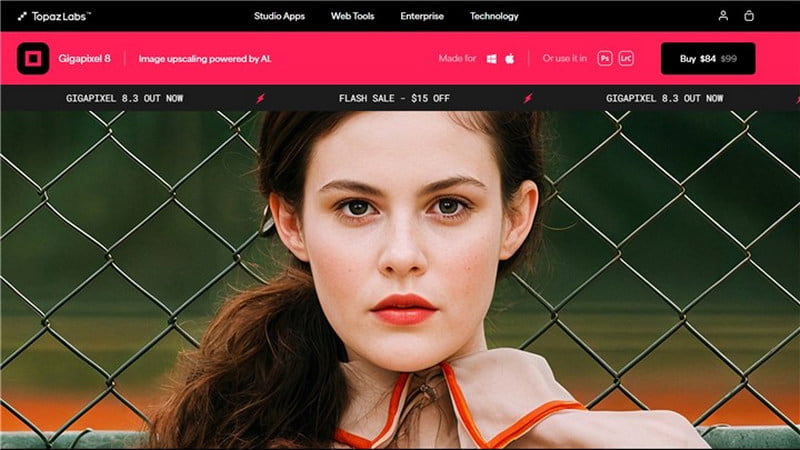
Pricing
| License Type | Price | Notes / Features |
| One-Time Purchase | $99 | Includes 1 year of free updates; can continue using the version indefinitely. |
| Standard Subscription | $149/year | Continuous updates; subscription-based model. |
| Monthly Subscription | $12–17/month | Pay month-to-month; includes all updates. |
| Pro / Studio License | Varies (higher) | Targeted at studios/commercial users; per seat/year. |
Platform & Compatibility
- • Operating Systems: macOS and Windows.
- • Integrations: Can be used alone or integrated into Lightroom Classic/Photoshop.
- • Linux Support: Not applicable. Recommended minimum of 16 GB of RAM. Large image packs may need a suitable GPU.
- • Offline Use: No internet connection required to process edits.
Pros
- • A3, A2, and poster-size prints can be successfully enlarged.
- • Easy-to-learn interface with a simple drag-and-drop method.
- • Time can be saved with batch image processing.
- • Low-resolution and older portrait photos can undergo detail restoration and improvement.
- • Faster processing and privacy of images are ensured when edits are done offline.
Cons
- • If resources are low, processing of batch jobs may take longer.
- • Large images also slow down processing.
- • An image editing program is required to gain features other than upscaling.
- • Enlarging may lead to artifacts and unnatural detail for low-res and other extreme images.
- • Cost may be a barrier for some.
Ease-of-Use & User Experience
- • Designed for both beginners and casual users.
- • Usability is showcased through clear steps to follow for image processing and upscaling.
- • Support for some advanced features for experienced users is provided.
- • Hardware can limit the process, especially in older devices.
Troubleshooting & Tips
- • If possible, check that your device meets the recommended specifications for smooth performance.
- • Be prepared to have your expectations tempered with very low resolution or noisy images that might have background artifacts.
- • Best results are obtained with moderate upscaling within a range of 2× to 4×.
- • Before upscaling, possible artifacts from noisy images should be detected and smoothed with denoising or sharpening tools.
- • Before using batch processing, it is recommended to test a small batch of images to assess the quality and stability of the system.
Part 3. Top 3 Gigapixel AI Alternatives
Although Gigapixel AI is currently one of the most used tools for upscaling images, there are other strong contenders with faster processing, easier workflows, and even free online access. From these, we will review the top 3, and we are convinced that for users looking for the best speed and no hassles with image enhancement, AVAide Image Upscaler is the best of the three.
1. AVAide Image Upscaler (Best Overall Alternative)
Fully online and AI-enabled, Light and fast, AVAide Image Upscaler is light and fast and the best upscaler that is available directly from the browser, with no software, plug-ins, account creations, etc. Image upscaling is seamless with the upscaling of blurred creations. As an alternative to Gigapixel AI, it relieves processed images of blurs, noise, and grain and is effective for low-resolution and older images. It works well with people, products, animals, cars, graphics, and digital art. Enhanced results with no manual editing required.
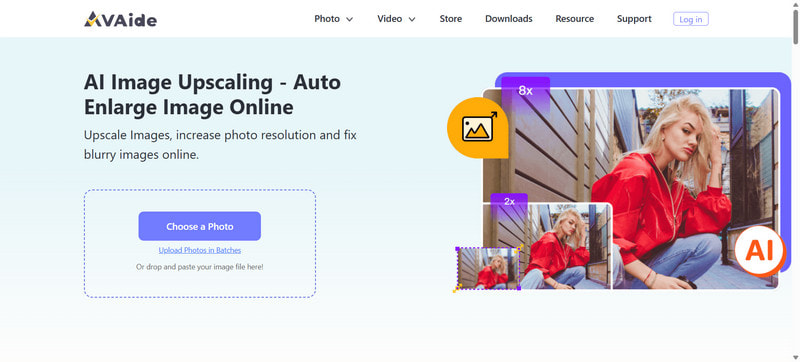
- Beginner-friendly, quick, and free.
- No watermark is attached to images after export.
- Smart AI detail restoration for upscaling up to 8×, ideal for a 4K image upscaler.
- Accessible on any browser and device.
- Great for portraits, product photos, and social media images.
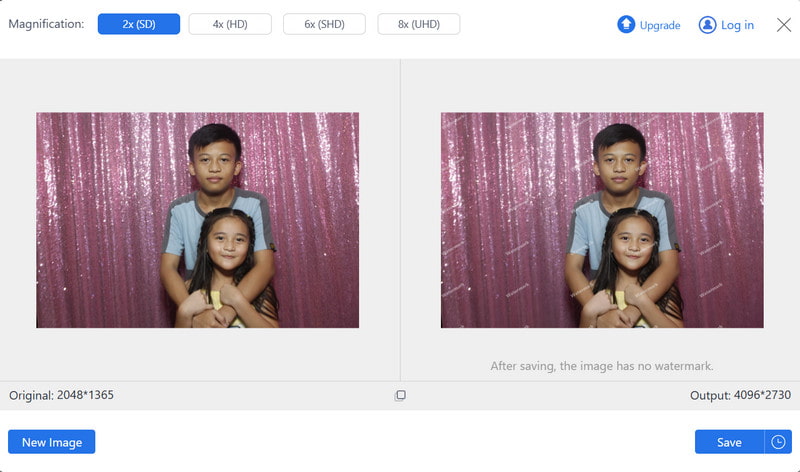
- Requires internet access since it is fully online.
2. Deep Image AI
Deep Image AI is another good-behaved online enhancer thanks to their smart upscale models and cloud processing. They provide larger output resolution compared to the other online tools, and are better for users who need larger, print-ready outputs.
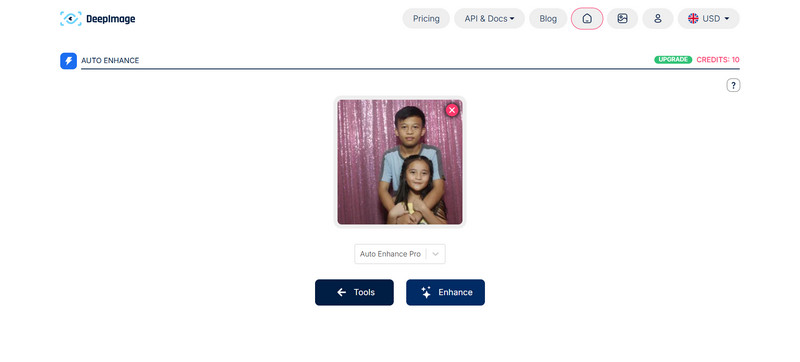
- Simple interface with clear controls.
- Works fast and offers high-resolution image output.
- Cloud-based models mean AI and performance should be consistent.
- Good for product and e-commerce photos.
- The free version is very limited and cannot upscale the image to 16×.
- You need to register to use most of the features.
- It can be slow when the server is busy.
3. Let's Enhance
Let's Enhance is an AI upscaler with a good standing reputation and is known for focusing on image enlarging, as well as improving texture, clarity, and lighting. This tool is very important for digital marketing, real estate photos, and visual commercials.
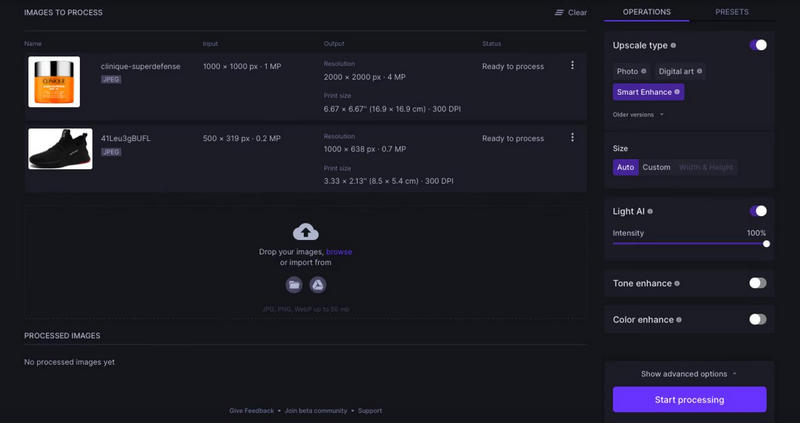
- Super easy to enhance color and light for clarity.
- Gives the use of presets for printing, e-commerce, and social media.
- More texture improvement and sharpness when upscaling for details.
- Good for faster workflows.
- It may be slow for users because of the required login.
- More frequent upscaling means your credits will run out faster.
- Outputs can be artificial, especially with very low-quality and damaged images.
In this post, Topaz Gigapixel AI proves it remains a powerful upscaling tool, especially for users who prioritize detail and offline processing. However, its hardware demands and pricing may not suit everyone. With capable alternatives like AVAide Image Upscaler and other modern AI tools, users now have flexible, faster, and more accessible options depending on their workflow.

Our AI technology will automatically enhance the quality of your images, remove noise and fix blurry images online.
PROCESS NOW